This is what we like most about exhibits: the moment when someone first looks, then comes closer, checks, walks around, and finally asks: how is this possible?
Because a good exhibit does not begin with an answer. It begins with CURIOSITY.
Discover our latest exhibits.
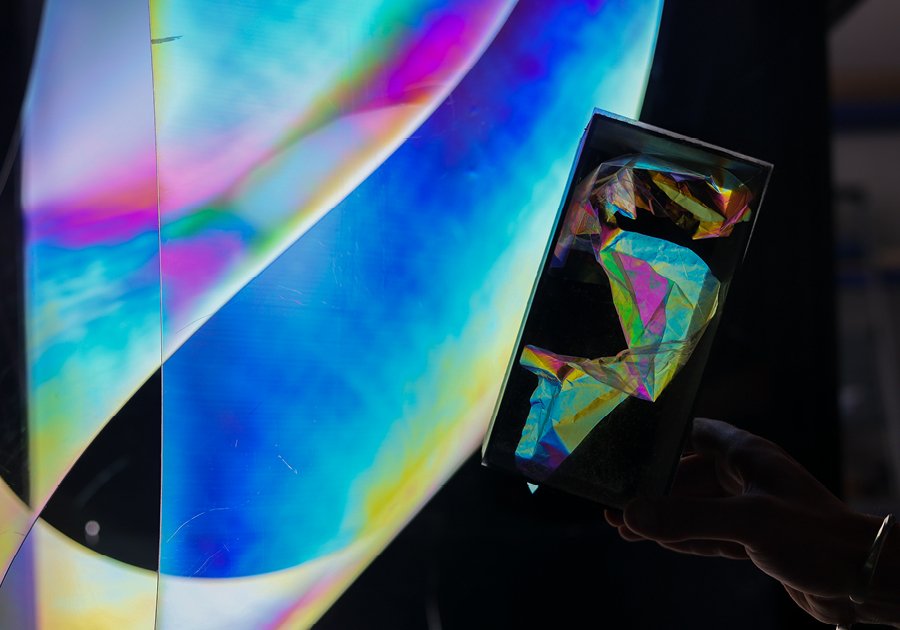
“Fotopolichromia” – where do these colours come from?
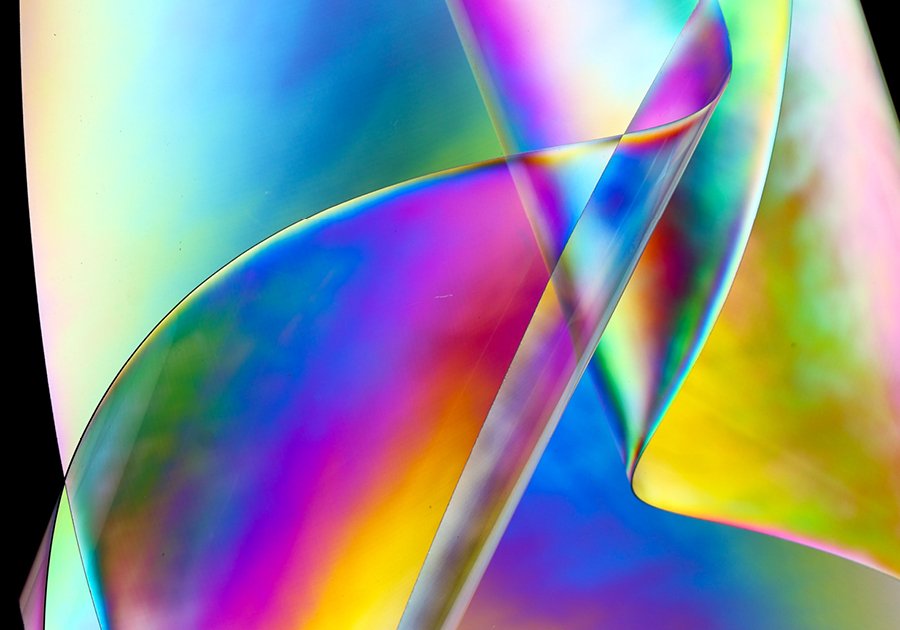
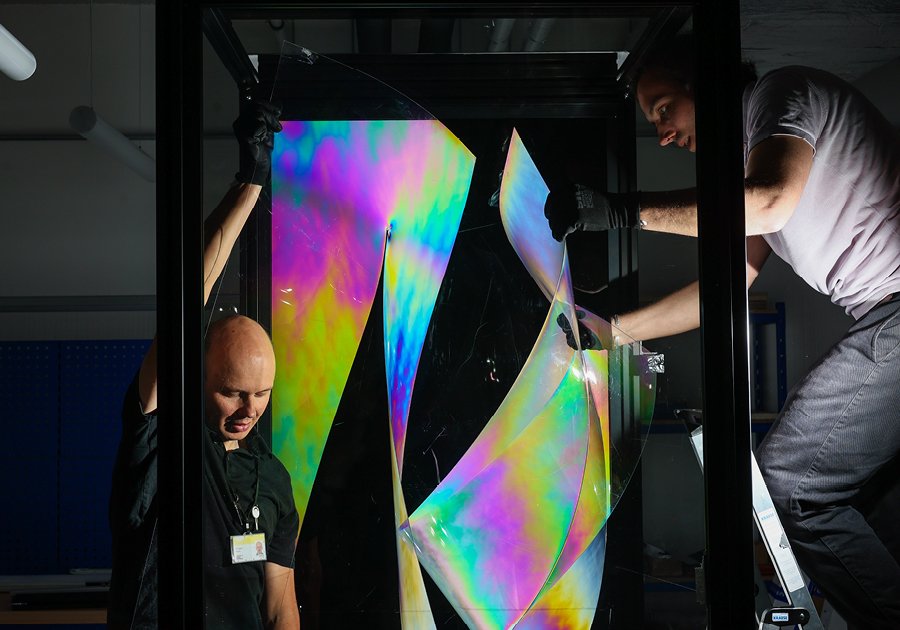
It is 2.5 metres tall, yet it is easy to walk past. From the side, it looks inconspicuous – like transparent films suspended inside a glass cube.
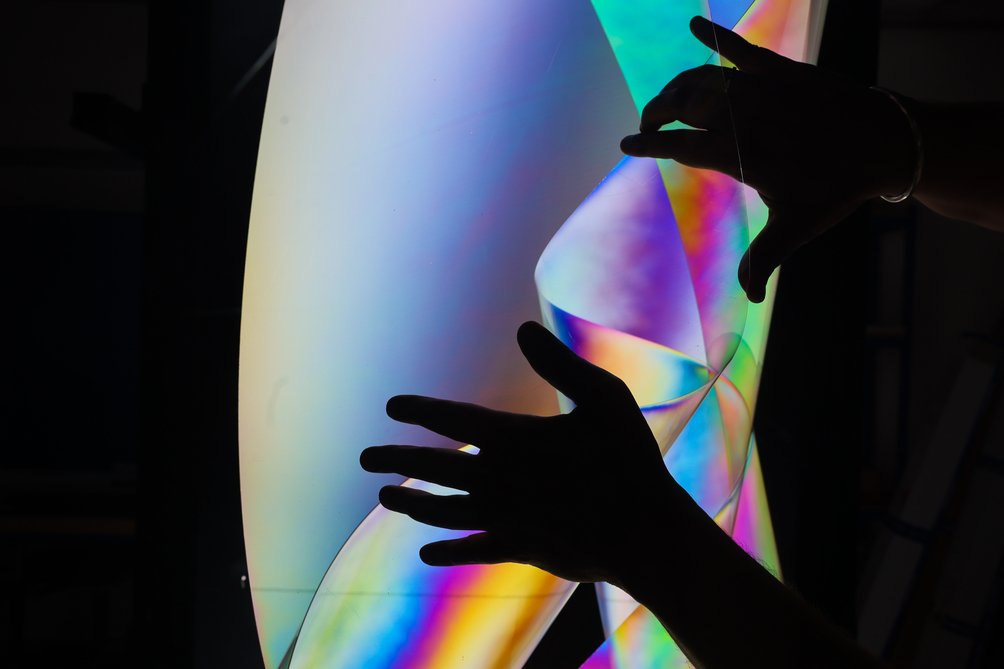
Stand in front of the exhibit, however. Suddenly you will see a riot of colours, as if someone had switched on a screen with a spectacular projection. And yet nothing has changed. The films rotate and shimmer with colour. Take a step to the side – the colours will disappear just as quickly as they appeared.
Where does the secret lie?

The transparent walls of the cube through which we observe the object are covered with polarising films positioned at right angles to each other. When we look through both at the same time, the light waves filtered by the first layer are almost completely blocked by the second. Only when an ordinary transparent material is placed between them does it change the direction of the light, allowing us to see colours.
The effect depends on the structure and thickness of the material, the internal stresses in the film and the position from which we are looking. This is why the image constantly changes as the films rotate and as we move.
These are not printed colours or the effect of a digital projection. The colours are produced solely by the properties of light and the material.
“Soap Mirror” – an image that cannot be repeated
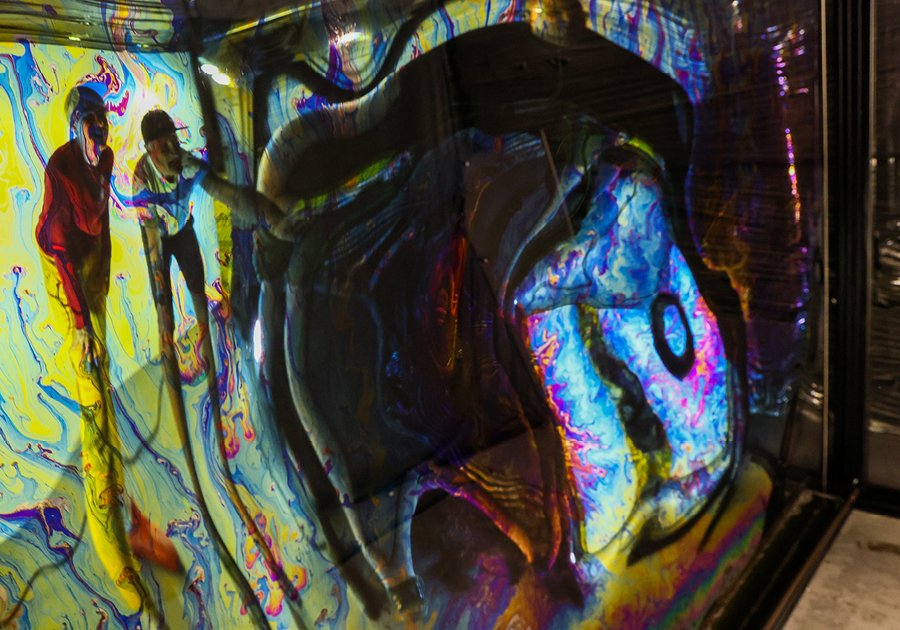
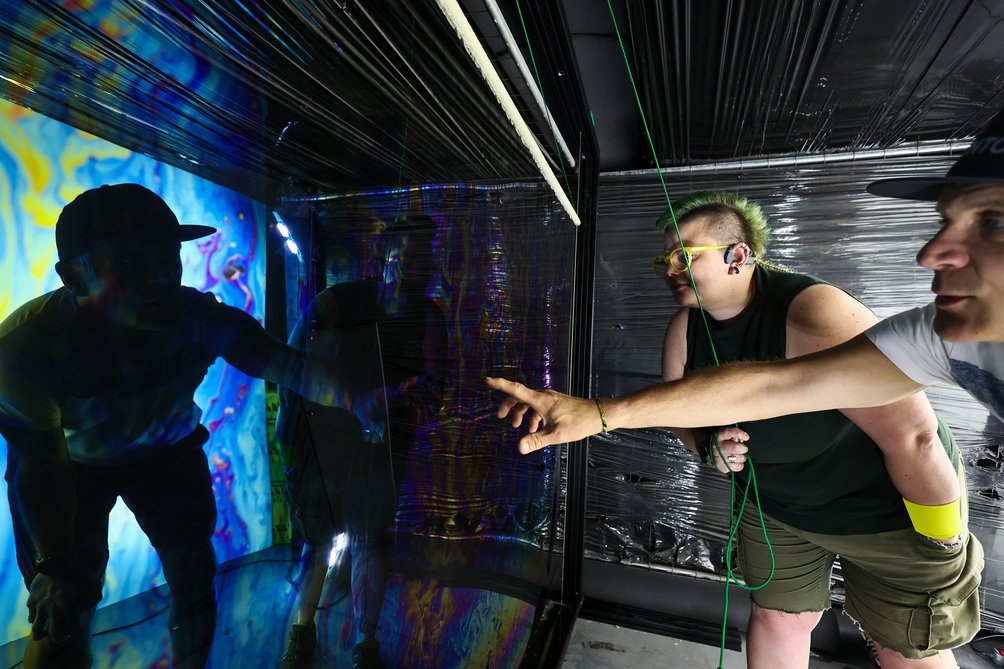
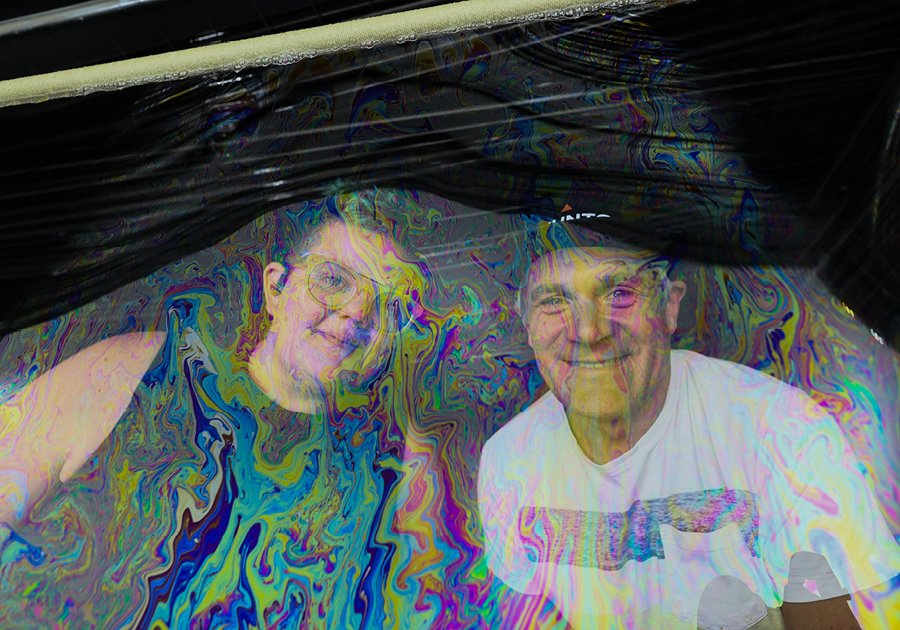
Imagine a mirror measuring 2 × 2 metres. Instead of a glass surface, you will see a soap film only a few micrometres thick. Colours constantly flow across its surface, blending into one another and forming new patterns.
Come closer. Move, make a gesture, take a breath. Even a slight movement of air will change the shape of the film and, with it, the image you see. In this way, you will become part of the phenomenon.
“Soap Mirror” looks different every moment. That is why it will be difficult to take two identical photos of this exhibit.
A photo taken by you

 Post photos of both exhibits on social media and tag @CentrumNaukiKopernik. We will see how different people look at the same physical phenomenon. We created the exhibits. By photographing them, you will create works of your own.
Although the exhibits have just made their way from the workshop to the Exhibitions, work on them will continue.
Many science centres buy ready-made solutions from specialised manufacturers. For years, the Copernicus Science Centre has been developing its own way of working, which includes prototyping exhibits.
The Copernican Revolution Lab houses workshops for designers and engineers, laboratories, a woodworking shop and a prototyping workshop. This is where new exhibits are created – from the initial idea, through design, all the way to the finished construction. But the work does not end there. We make nearly finished prototypes available to visitors so that they can test them.
The exhibition as a laboratory
Many science centres buy ready-made solutions from specialised manufacturers. For years, the Copernicus Science Centre has been developing its own way of working, which includes prototyping exhibits.
The Copernican Revolution Lab houses workshops for designers and engineers, laboratories, a woodworking shop and a prototyping workshop. This is where new exhibits are created – from the initial idea, through design, all the way to the finished construction. But the work does not end there.
Designers can anticipate a great deal. They can calculate the structure, select materials and test how mechanisms work. But they cannot plan everything. That is why they observe visitors.
Among other things, they check:
- Does the exhibit attract attention? Or does the area around it become too crowded?
- What emotions and impressions does it evoke?
- Is the activation mechanism, and any controls, easy to understand?
- Does the film in “Soap Mirror” maintain the right tension? Does the liquid stay within the exhibit
- Does the lighting bring out all the colours without dazzling visitors?
Many of these questions cannot be answered in the workshop.
Visitors as co-creators of exhibits
The exhibits work as intended and present the phenomena they were designed to show. However, the designers are still refining dozens of details that affect the quality of the experience.
Every time someone stops at an exhibit, every attempt to activate it and every visitor reaction provides important information for the designers. These observations allow them to refine their ideas while taking users’ needs – your needs – into account. Test the exhibits. This is how you help develop them
How exhibits are created at Copernicus
Our way of working grew out of the school of design created by Frank Oppenheimer, founder of the world’s first science centre – the Exploratorium in San Francisco. This American physicist, brother of J. Robert Oppenheimer, believed that an exhibit should allow people to discover a phenomenon for themselves instead of explaining how they should understand it. This seemingly subtle difference influences every design decision. Copernicus creators learned from Oppenheimer’s students.
They also visited science centres around the world, exploring different versions of this approach and developing it creatively. On this basis, Copernicus developed its own design method.
“Fotopolichromia” and “Soap Mirror” are excellent examples of how exhibits are created at Copernicus. Each is developed by a team of people with different backgrounds. No one works separately on “their part” – the team develops the project together, returning to it repeatedly. Every change may affect the work of the others.
Their goal is not to create an eye-catching installation or an object that “correctly” demonstrates a physical phenomenon. They design a visitor experience in which scientific precision leads to wonder.
The creators of the latest exhibits are a team in which the leading roles were played by Krzysztof Redzisz and Grzegorz Antos – the designer and engineer behind Fotopolichromia – and Jacek Błoniarz-Łuczak and Olha Zaloha – a physicist and materials engineer responsible for “Soap Mirror”. Do not be misled by their professional specialisations. They are creators who design experiences drawing on science, engineering, design and art.
Is what you see still a demonstration of a physical phenomenon, or has it already become a work of art? We leave the answer to you.
The project “Contemporary exhibits in science centres – an innovative combination of science and design at the Copernicus Science Centre” was co-financed by the Minister of Culture and National Heritage under the Institute of Creative Industries’ own programme: Creative Industries Development.
Amount of funding: PLN 118,979
Total project value: PLN 174,559