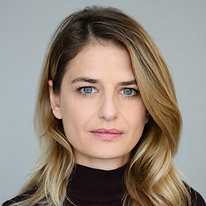
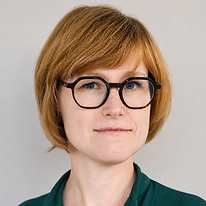
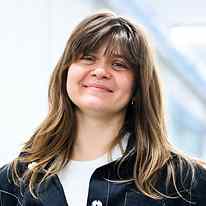
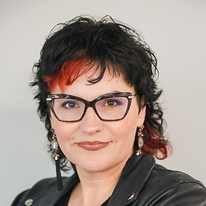
Research team
Products that come to life in the Copernican Revolution Lab are a result of cooperation between a few, or even a few dozens of people from the Copernicus team. We invite you to get in touch with the persons who will allow you to establish a working relationship with specific teams or labs.
Bio
Head of the Future Competencies Research Department at the Copernican Revolution Lab, the research and development division of the Copernicus Science Centre. Her team explores learning processes and develops educational tools. Through research and evaluation, they investigate learning communities and examine how educational environments and solutions support the development of key 21st-century skills, including critical thinking and collaboration.
Research areas and interests
Learning Environments Design-based research Informal Education
Current projects and activities
Publications, articles and podcasts
- Iłowiecka-Tańska, I., & Potęga vel Żabik, K. (2025). Interaction with exhibits: The significance of instrumentalization. Science Education, 109(2), 448–479. doi: 10.1002/sce.21913
- de Chantal, P. L., Beaty, R. E., Laverghetta, A., Pronchick, J., Patterson, J., Organisciak, P., Potęga vel Żabik, K., Barbot, B., & Karwowski, M. (2025). Artificial intelligence enhances human creativity through real-time evaluative feedback. PsyArXiv Preprints. DOI: 10.31219/osf.io/qrgbn
- Potęga vel Żabik, K., Abrahamson, D., & Iłowiecka-Tańska, I. (2024). It takes two to OЯTHO: A tabletop action-based embodied design for the Cartesian system. Digital Experiences in Mathematics Education, 10(2), 189–201. doi: 10.1007/s40751-024-00139-8
- Potęga vel Żabik, K., Tanaś, Ł., Iłowiecka-Tańska, I., & Karwowski, M. (2021). Children's implicit theories of creativity in science. Thinking Skills and Creativity, 41, 100898. doi: 10.1016/j.tsc.2021.100898
- Tanaś, Ł., Winkowska-Nowak, K., Roszak, J., & Potęga vel Żabik, K. (2020). Females and STEM: The Anna Karenina Principle [Commentary]. IEEE Technology and Society Magazine, 39(1), 12–15. doi: 10.1109/MTS.2020.2967485
- Iłowiecka-Tańska, I., & Potęga vel Żabik, K. (2025). How Visitors Tame Exhibits: Using a design-based research method to understand visitors' performance. W: DASA Arbeitswelt Ausstellung, Professur für Museologie der Universität Würzburg & Institut für Museumsforschung (red.), Besser ausstellen: Innovative Wege der Konzeption und Evaluation von Ausstellungen (rozdz. 13). Bielefeld: transcript Verlag. DOI: 10.14361/9783839466834
- Iłowiecka-Tańska, I., & Potęga vel Żabik, K. (2024). Czy Księżyc zrobiony jest z sera? Rozmowy zwiedzających Centrum Nauki z humanoidalnym robotem Mikołaj Kopernik. W: S. Borowicz, J. Hobot-Marcinek (red.), Technopaideia. Zaawansowane technologie w edukacji humanistycznej (s. 239–250). Kraków: Wydawnictwo Uniwersytetu Jagiellońskiego.
- Iłowiecka-Tańska, I., Potęga vel Żabik, K., & Gop, A. (2023). Teachers as Designers: Learning by Exhibit Prototyping. W: J. Diamond & S. Rosenfeld (red.), Amplifying Informal Science Learning: Rethinking Research, Design, and Engagement (s. 79–88). Nowy Jork: Routledge.
- Potęga vel Żabik, K. (2019). Dziewczynki i chłopcy na wystawach: Problem stereotypizacji płciowej w placówkach edukacji nieformalnej. W: P. Kowal & K. Wolska-Pabian (red.), Muzeum i zmiana. Losy muzeów narracyjnych (s. 187–195). Kraków: Universitas.
- Brzeziński, W., Potęga vel Żabik, K., & Wachol, K. (2024, 20 grudnia). Jak nowoczesne technologie wpływają na naukę naszych dzieci? Tygodnik Powszechny. Posłuchaj / przeczytaj →
Bio
Researcher at the Copernicus Science Centre, sociologist, and expert in disability studies. Her interests include participatory and inclusive research methods. She studies formal and informal learning settings, and explores the relationship between science communication and public attitudes towards science. She is the author and co-author of reports and publications on education, accessibility, and young people’s engagement with science. She coordinates research and research-and-development activities within the “Giving science a voice” project and collaborates with teams designing educational resources and science communication formats.
Research areas and interests
Attitudes Towards Science Youth Research Participation Citizen Science Qualitative Research
Current projects and activities
Publications, articles and podcasts
Bio
Philosopher of science, lecturer in the Artificial Intelligence and Cognitive Science programme at the University of Warsaw, and expert for IPBES (Intergovernmental Science-Policy Platform on Biodiversity and Ecosystem Services). She earned her PhD from the Wageningen School of Social Sciences in the Netherlands in 2025. Her research interests span philosophy of science, anthropology, and transdisciplinary studies, with a particular focus on global epistemologies, Indigenous knowledge, and social ontology. At the Copernicus Science Centre, she works on science communication, fostering trust in science, and developing educational innovations that address contemporary socio-environmental challenges, including the evolving needs of the labour market.
Research areas and interests
Philosophy of Science Transdisciplinary Research Biodiversity Anthropology Epistemology
Current projects and activities
Publications, articles and podcasts
- Review: For Emplacement: Political Ontology in Two Acts. Mario Blaser. Durham, NC: Duke University Press, 2025 , Journal of Anthropological Research (2026)
- Filozofka nauki: Badam, kto ma prawo uchodzić za eksperta. Czy tylko naukowcy? , Gazeta Wyborcza (2025)
- Transdisciplinary Methods in Philosophy of Science: The Conde Project , in Philosophy of Science: A User's Guide, edited by Adrian Currie & Sophie Veigl. MIT Press (2025).
- David Ludwig, Jéssica S. da Hora Barros, Paride Bollettin, Thais Ferreira da Silva Costa, Gabriela De La Rosa, Juliana de Oliveira Fonseca, Taiala Viviane Menezes de Jesus, Esther Milberg, Luana Poliseli, Adriana C Ressiore, Vitor Renck, Ivonei Santana Santos, Adielle de Almeida Silva, Júlia Stifelman, Julia J. Turska and Charbel N. El-Hani (2025).
- Not agreement but understanding. Davidson, Viveiros de Castro, and the lived experience view on cross-linguistic disagreement , Asian Journal of Philosophy (2025)
- Southern Ontologies. Reorienting Agendas in Social Ontology , Journal of Social Ontology. David Ludwig, Daniel Faabelangne Banuoku, Birgit Boogaard, Charbel N. El-Hani, Bernard Yangmaadome Guri, Matthias Kramm, Vitor Renck, Adriana Ressiore C., Jairo Robles-Piñeros and Julia J. Turska (2024).
- Back by popular demand, ontology: Productive tensions between anthropological and philosophical approaches to ontology , Synthese. Julia J. Turska and David Ludwig (2023).
- Transdisciplinary Philosophy of Science: Meeting the Challenge of Indigenous Expertise , Philosophy of Science. David Ludwig, Charbel N. El-Hani, Fabio Gatti, Catherine Kendig, Matthias Kramm, Lucia Neco, Abigail Nieves Delgado, Luana Poliseli, Vitor Renck, Adriana Ressiore C., Luis Reyes Galindo, Thomas Lloyd Rickard, Gabriela De La Rosa, Julia J. Turska, Francisco Vergara-Silva, Robert A. Wilson (2023).
- Jakie znaczenie mają w Brazylii afrykańskie tradycje , Dział Zagraniczny, podcast (2023)
- Conceptual Relativism and Linguistic Anthropology: How to comprehend the incomprehensible? , Institute for Logic, Language and Computation Dissertation Archive, University of Amsterdam, supervised by Prof. Dr Martin Stokhof (2018).
Bio
A cultural studies scholar, researcher, and innovation and service designer. She combines research, design, and management perspectives, planning and coordinating research that supports the development of educational products and programmes at the Copernicus Science Centre. Her work focuses on designing solutions through collaboration, iterative testing, and the inclusion of diverse user perspectives. She is the creator and coordinator of the Expert Panels – a participatory forum for the co-creation, consultation, and evaluation of educational solutions developed at the Copernicus Science Centre.
Research areas and interests
Social Participation Co-creation Innovation Design Service Design User Research Evaluation Research Data Management
Current projects and activities
Bio
Conducts research on the design of educational resources used by teachers in schools and on learning environments that support the development of future competencies. His work also explores methods of knowledge transfer between academic institutions and wider society.
Publications, articles and podcasts
Bio
Graduate in Journalism and Social Communication, with an interest in media studies and contemporary communication practices. Her research has explored media production environments and journalism education. She gained research experience at a non-governmental organisation operating in the cultural sector, where she conducted, among other things, audience research and evaluated the accessibility of cultural institutions and their programmes. At the Copernicus Science Centre, she contributes to the “Giving science a voice” project, supporting research and citizen science initiatives.
Research areas and interests
Media Studies Communication Journalism Education Citizen Science Cultural Participation
Current projects and activities
Bio
Responsible for planning and conducting research within the “ZBADAI” project, which supports the development of teachers’ competencies in artificial intelligence. She has experience coordinating international research projects at the intersection of science and education, with a particular interest in translating research findings into practical educational solutions. Alongside her work, she is pursuing a PhD in Cognitive Neuroscience at the Psychology of Language and Bilingualism Laboratory at Jagiellonian University.
Research areas and interests
Education Artificial Intelligence Digital Competencies Multilingualism Cognitive Science Language ProcessingResearch Translation
Current projects and activities
Bio
A cultural studies scholar, qualitative researcher, and pedagogy student. As part of the “Giving science a voice” project, she conducts qualitative research and contributes to the prototyping of solutions that support the development of scientists’ communication skills. Her work combines a humanistic perspective with an analytical approach to complex social phenomena, translating research findings into practical recommendations. Her interests include educational inequalities and the impact of emerging technologies on learning.
Research areas and interests
Social Research Education Educational Inequalities Science Communication EdTech innovation and service design
Current projects and activities
The task “Building of Copernican Revolution Lab, included in the expansion of the Copernicus Science Centre” is co-financed by the funds of the Capital City of Warsaw – Specific Subsidy Contract from the Funds of the Capital City of Warsaw no. C/OM/VII/P3/99/U-263/2018-2021, from 31st October 2018. The amount of funding: 27 690 101,00 PLN.