This will be the deepest partial solar eclipse visible here since 1999. In Warsaw, around 84% of the Sun’s disc will be covered. The eclipse will begin at around 7:15 pm and reach its maximum at 8:02 pm – just before sunset at 8:07 pm.
We’ll start our observations at 7:00 pm. From the city centre, the horizon can be difficult to see because of the surrounding high-rise buildings, so we’ll head up to the roof of the Copernicus Science Centre. We’ll also bring telescopes and experts from the Polish Society of Amateur Astronomers.
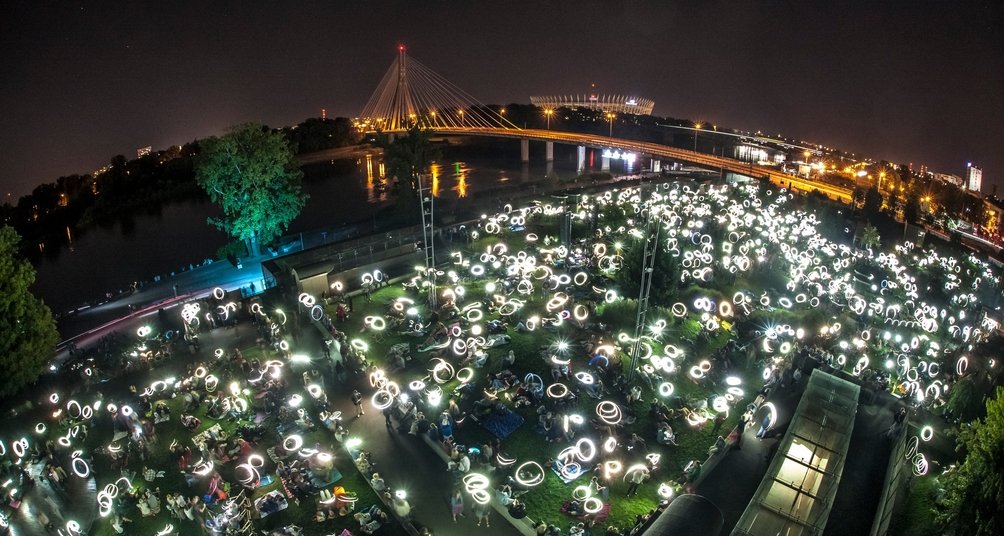
Once the eclipsed Sun has set, we’ll head back down and wait for the sky to grow darker. At 9:00 pm, we’ll start looking out for the Perseids. Watching them couldn’t be easier – simply lie back on a blanket or deckchair and take in as much of the sky as possible. As usual, we’ll switch off the illuminations of nearby buildings and other bright light sources. We’ll also be joined by fascinating guests, show you real meteorites, and there will be live music and food trucks.
Of course, the darker the sky, the more you can see. But if you happen to be in Warsaw, come and join us. We promise a one-of-a-kind atmosphere that only happens when people come together to share an experience.
- Date and time: 12 August, 7:00 pm–12:00 am
- Location: Green area by the Vistula Boulevards and the Planetarium at the Copernicus Science Centre
- Admission: free
- We do not sell eclipse viewing glasses.
Important! If you plan to observe the eclipse on your own, make sure you use proper solar-viewing glasses fitted with Mylar or ND5 filter material, or specialist Baader solar film. These can be purchased online or from astronomy equipment retailers.
Remember: ordinary sunglasses, photographic film, old floppy disks, smoked glass or X-ray film will not protect your eyes. Looking at the Sun through makeshift “filters” like these can cause permanent retinal damage or burns, known as solar retinopathy.
The event will be conducted in Polish.