
Festiwal Przemiany - archiwum
Debates

During the festival debates, we will put AI on trial and consider whether artificial intelligence can protect us from itself.
Debate programme
Lecture Room, Level 0
3 October (Saturday)
1.00 pm – 2.00 pm: AI in the service of (post)truth
4 October (Sunday)
1.00 pm – 2.15 pm: The Trial of AI

The discussions will be interpreted into the Polish Sign Language (PJM).
AI in the service of (post)truth
📅 3 October (Saturday)
🕖 1.00 pm – 2.00 pm
📍 Lecture Room, Level 0
AI is not only capable of generating false information, images and videos, but also of helping to disseminate them on a massive scale and lending them an air of credibility. On the other hand, these same technologies can support source analysis and the detection of manipulation. What role will AI play in the future? Will it primarily become a factory for disinformation, or part of the system designed to defend against it?
At the start of the debate, you will choose a side in the debate. Then the real debate will begin: you’ll listen to the arguments, ask questions, persuade others and put your own position to the test. And if the other side’s arguments prove to be stronger, you can always change your mind and switch to the opposing camp. Rafał Kozłowski from the Demagog Association, an expert on disinformation, political communication and fact-checking, will help to assess the arguments. We’ll be discussing the responsibility of platforms, the line between regulation and censorship, and what skills we need to navigate a world in which it is becoming increasingly difficult to distinguish real information from deepfakes.
Expert: Rafał Kozłowski (Demagog Association)
Moderators: Błażej Dawidson, Jakub Tołkaczewski (Copernicus Science Centre)

Rafał Kozłowski
Expert in political communication, disinformation and fact-checking
Read full bio
Rafał Kozłowski has been a member of the Demagog team since March 2026. A graduate of political science at Maria Curie-Skłodowska University and criminology at the Academy of Applied Sciences.
An expert in the fields of political communication and research into the impact of Russian disinformation in the media. As a trainer, he pursues his educational mission by delivering fact-checking training to representatives of non-governmental organisations, public institutions and the business sector, as well as to teachers and young people.
He has been involved in the NGO sector for many years, where he has co-authored reports and political and social analyses, and has, amongst other things, developed the myPolitics project at the Generacja Innowacja Foundation.

Błażej Dawidson
Sociologist, Service Designer and Science Communication Consultant
Read full bio
Błażej Dawidson is a sociologist and service designer by training. He currently works as a consultant, including in the field of science communication. He previously worked at the Copernicus Science Centre.

Jakub Tołkaczewski
Event Coordinator and Moderator, Copernicus Science Centre
Read full bio
Jakub Tołkaczewski is the coordinator of the “Adults Only Evenings” programme at the Copernicus Science Centre. He has been involved in the planning and delivery of numerous events, including the Ecsite 2025 Conference, the Przemiany Festival, the Science Picnic and the Perseid Night, taking responsibility for selected aspects of production, programming and event organisation.
In 2024–2025, he also moderated debates and panel discussions during the Mazovia Development Forum. He gained additional experience as an educator and manager of arts camps, as well as through organising academic events as a member of the University of Warsaw Students’ Union.
The Trial of AI
📅 4 October (Sunday)
🕖 1.00 pm – 2.00 pm
📍 Lecture Room, Level 0
Artificial intelligence is to stand trial. The following will be present in the courtroom: the prosecution, the defence, the witnesses and the jury, of which you will be members. The charges will be revealed during the trial, and each side will try to convince you of their own version of events. The central question of the trial will be: is AI dumbing down the younger generation?
We’ll treat the trial as half-joking, half-serious, but the subject of the dispute will be very real indeed. We will ask where the line lies between support and doing things for others: when does AI enhance cognitive abilities, and when does delegating to it tasks that previously required independent thought, effort and ingenuity become a trap for young people? Could the price we pay for convenience be the deterioration of future generations’ cognitive abilities and a shirking of responsibility for our own thoughts? In a world of content overproduction, do young people still have the chance to develop their own abilities by making use of AI, rather than succumbing to it?
Sylwia Czubkowska will present a critical analysis of the world of big tech companies and the interests driving the development of AI, whilst psychologist and neurocognitivist Maksymilian Bielecki, PhD, will help us distinguish between what we actually know about the impact of new technologies on our cognitive processes and what is merely intuition, fear and media oversimplification. The experts will act as witnesses, whilst the moderators will take the sides of the prosecution and the defence. It is up to you – the jury – to decide the verdict.
Experts: Sylwia Czubkowska (Techstorie), Maksymilian Bielecki, PhD (SWPS University)
Moderators: Błażej Dawidson, Joanna Kalinowska (Copernicus Science Centre), Jakub Tołkaczewski (Copernicus Science Centre)
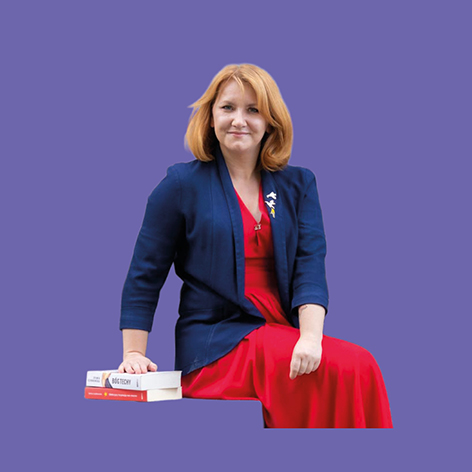
Sylwia Czubkowska
Economics and technology journalist, author and podcaster
Read full bio
Sylwia Czubkowska is a long-standing business and technology journalist for publications such as Gazeta Wyborcza, Dziennik Gazeta Prawna and Przekrój. Host of the ‘Techstorie’ podcast on Tok FM.
The founder of Spider’sWeb+ magazine, which was nominated for the Grand Press Digital Award in 2022. Nominated on numerous occasions for the most prestigious journalism awards: Grand Press, the Newsweek Award named after Teresa Torańska, the award named after Marek Król, the award named after Mariusz Walter. Four-time winner of the Patent Office President’s Award for articles on innovation. Winner of the Prof. Romana Czernecki and the Institute of Reportage’s ‘Theme: Refugees’ awards.
Author of the books ‘Chińczycy trzymają nas mocno’ (2022) and ‘Bóg Techy’ (2025), which was awarded the title of Business Book of the Year in the Puls Biznesu competition and the award named after Marcin Król for books that present new ideas.

Maksymilian Bielecki, PhD
Psychologist and researcher, Assistant Professor in the Department of Computer Science at SWPS University
Read full bio
Maksymilian Bielecki, PhD, is a psychologist and a senior lecturer in the Department of Computer Science at SWPS University. Co-founder of the Open Artificial Intelligence Laboratory and the Observatory of Media Practices – a research and implementation centre focusing, amongst other things, on the analysis of media discourse and the psychological aspects of growing up in the digital age. He collaborates with a number of leading Polish research institutions. His academic work focuses, amongst others, on methodology, statistics, the psychology of memory and attention, as well as the psychological aspects of the energy transition.
He has been working in the business world for over a dozen years. He has designed and implemented R&D projects in start-ups, and has worked with many leading companies as a consultant and trainer. He is the originator and author of the ‘Futureproof’ reports, which were presented at the IMPACT conferences in 2024 and 2025.
Błażej Dawidson
Sociologist, Service Designer and Science Communication Consultant
Read full bio
Błażej Dawidson is a sociologist and service designer by training. He currently works as a consultant, including in the field of science communication. He previously worked at the Copernicus Science Centre.

Joanna Kalinowska
Partnerships, Fundraising and Project Development Specialist
Read full bio
She graduated from Inter-Faculty Studies in Environmental Protection at the Warsaw University, and worked in educational and fundraising NGOs as the Project Coordinator and Director of Development. She joined the team at the Copernicus Science Centre prior to its opening and has collaborated with all the CSC sponsors in joint events and activities ever since. Her earlier professional experience in the field of fundraising resulted in setting up the Copernicus Club membership programme for the Centre’s regular visitors. She is a member of the Programme Committee of the European Network of Science Centres and Museums (ECSITE) annual conference (since 2013).
Jakub Tołkaczewski
Event Coordinator and Moderator, Copernicus Science Centre
Read full bio
Jakub Tołkaczewski is the coordinator of the “Adults Only Evenings” programme at the Copernicus Science Centre. He has been involved in the planning and delivery of numerous events, including the Ecsite 2025 Conference, the Przemiany Festival, the Science Picnic and the Perseid Night, taking responsibility for selected aspects of production, programming and event organisation.
In 2024–2025, he also moderated debates and panel discussions during the Mazovia Development Forum. He gained additional experience as an educator and manager of arts camps, as well as through organising academic events as a member of the University of Warsaw Students’ Union.