
Festiwal Przemiany - archiwum
Master panels

During the four panel discussions, experts from various fields will examine how AI is transforming our thinking, art, medicine and approach to health.
Panel programme
Auditorium
3 October (Saturday)
2.00 pm – 3.30 pm: Who Will be Your Doctor: a Human or AI?
4.00 pm – 5.30 pm: What Gets Lost in Algorithmic Translation?
4 October (Sunday)
2.00 pm – 3.30 pm: Use Your Head or Ask AI
4.00 pm – 5.30 pm: AI on the couch – mental health in the hands of artificial intelligence

The discussions will be interpreted into Polish Sign Language (PJM).
Who Will be Your Doctor: a Human or AI?
3 October (Saturday)
2.00 pm – 3.30 pm
Auditorium
AI is increasingly being used in areas where the stakes are particularly high: in research into new medicines, the analysis of medical images and test results, and the selection of treatments.
We will discuss where specialised AI tools can genuinely accelerate progress in medicine and science, and how their reliability is assessed before they are used in treatment. What should happen if the model’s recommendation differs from the physician's assessment? How will the work of physicians and scientists change when an increasing proportion of the analysis is carried out by AI systems?
Panel in collaboration with AstraZeneca
Experts: Prof. Łukasz Kołtowski, MD, PhD (Warsaw Medical University), Robert Dewor (Medical Director, AstraZeneca)
Moderators: Marek Szymaniak (Czarne Publishing House), Marta Fikus-Kryńska PhD (Copernicus Science Centre)
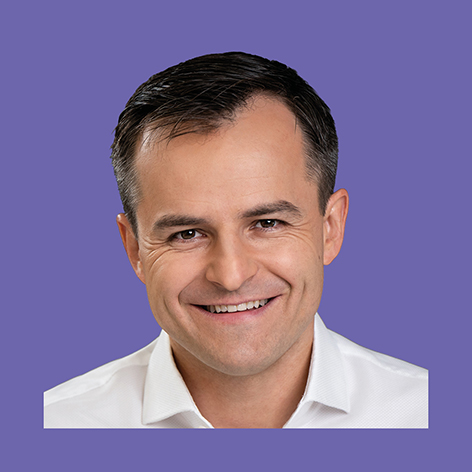
Professor Łukasz Kołtowski, MD, PhD
Interventional Cardiologist, AI and Digital Health Researcher
Read full bio
Is an interventional cardiologist and a professor at the Medical University of Warsaw. For years, he has been combining medicine with new technologies – developing applications of artificial intelligence and digital solutions in the diagnosis and treatment of heart disease.
As Director of the University Centre for Clinical Research Support, he is responsible for conducting research into new therapies, including those utilising AI tools. On a day-to-day basis, he performs minimally invasive cardiac procedures, in which the physician’s decisions are increasingly supported by algorithms that analyse images from inside the coronary arteries.
A member of the European Society of Cardiology’s Committee on Digital Cardiology and Artificial Intelligence, and of the Executive Committee of the Artificial Intelligence and Digital Solutions Section of the Polish Society of Cardiology. A health expert at the European Commission and a recipient of the MIT Technology Review’s ‘Innovators under 35’ award.
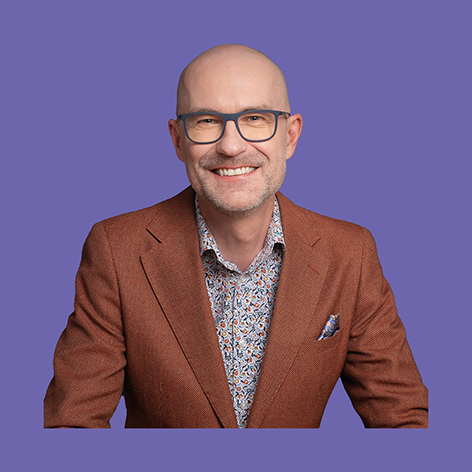
Robert Dewor
Physician and Manager, Expert in Medical Innovation and AI
Read full bio
Robert Dewor to lekarz i menedżer z ponad 25-letnim doświadczeniem w międzynarodowym sektorze farmaceutycznym. Od 2022 roku pełni funkcję Dyrektora Medycznego w AstraZeneca Polska, gdzie kieruje zespołem zajmującym się takimi obszarami jak: onkologia i hematologia, choroby układu oddechowego, immunologia, kardiologia, nefrologia, choroby metaboliczne, choroby rzadkie, szczepionki oraz Real World Evidence.
Aktywnie zaangażowany w rozwój zastosowań sztucznej inteligencji w medycynie. Współautor opublikowanej w npj Digital Medicine pracy dotyczącej algorytmu AI wspierającego wczesne wykrywanie nocnej napadowej hemoglobinurii (PNH), rzadkiej i trudnej diagnostycznie choroby hematologicznej.
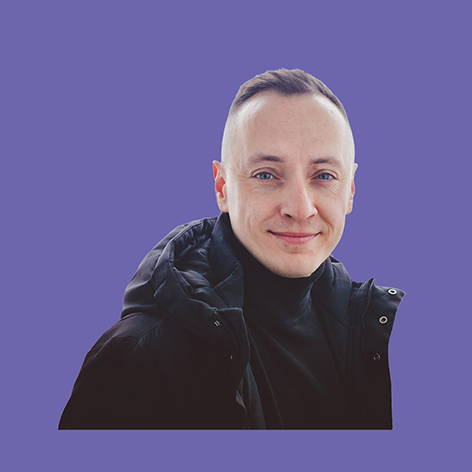
Marek Szymaniak
Journalist and Reporter Specialising in the Labour Market and New Technologies
Read full bio
Marek Szymaniak jest dziennikarzem i reporterem. Obecnie publikuje w Magazynie „Spider'sWeb+”, „Tygodniku Powszechnym” oraz „Piśmie”. Twórca podcastu o pracy „Pracownia”. Specjalizuje się w tematyce rynku pracy, w szczególności pracy zmienianej przez nowe technologie. Autor książek „Urobieni. Reportaże o pracy”, „Zapaść. Reportaże z mniejszych miast” oraz najnowszej „Młócka. Reportaże o pracy przyszłości”.
Laureat Nagrody Dziennikarstwa Ekonomicznego Press Club Polska i nagrody za reportaż prasowy przyznawanej przez jury Festiwalu Wrażliwego. Zwycięzca konkursu dla dziennikarzy „Pióro odpowiedzialności”. Trzykrotny finalista Nagrody „Newsweeka” im. Teresy Torańskiej.

dr Marta Fikus-Kryńska
Content Designer, Trainer and Educator at the Copernicus Science Centre
Read full bio
Dr Marta Fikus-Kryńska jest absolwentką Wydziału Biologii Uniwersytetu Warszawskiego. Projektantka treści w Dziale Wystaw Centrum Nauki Kopernik. Trenerka i edukatorka, autorka tekstów, pokazów, warsztatów, koncepcji eksponatów i wystaw.
Pracuje z dziećmi i dorosłymi. Ciekawią ją procesy zachodzące w przyrodzie.
What Gets Lost in Algorithmic Translation?
3 October (Saturday)
4.00 pm – 5.30 pm
Auditorium
Artists using AI are no longer confined to experimenting with generative aesthetics or disputes over copyright. Remaining at the forefront of technological change, they are delving ever deeper: they are examining databases, the physical infrastructure of AI, and the ways in which algorithms describe and organise the world.
They also ask what simplifications, omissions and biases embedded in the data might be replicated, reinforced and presented by these systems as a seemingly neutral picture of reality.
During the panel discussion, we will talk about what happens when images, voices, memories and other elements of human experience are converted into data and interpreted by digital systems.
The creators of the ‘‘In Algorithmic Translation’ exhibition, who work with robotics, sound, the physical dimension of technology and digital archives, will collectively explore what we gain and what we lose in such a translation, as well as how art can open up the ‘black boxes’ of technology.
The event will also be a unique opportunity to speak directly with the artists whose works and installations you will see during the festival.
The panel will be held in English with simultaneous interpretation into Polish.
Guests: Patrycja Maksylewicz, PhD (Academy of Fine Arts in Kraków), Andreas Lutz, Sefa Sagir and Anna Klimczak, PhD (Polish-Japanese Academy of Information Technology), Agnieszka Rayss, PhD (SWPS University), Varvara Guljajeva, PhD (Estonian Academy of Arts), Mar Canet Solà, PhD (Tallinn University)
Moderators: Rafał Kosewski (Copernicus Science Centre), David Sypniewski (SWPS University)
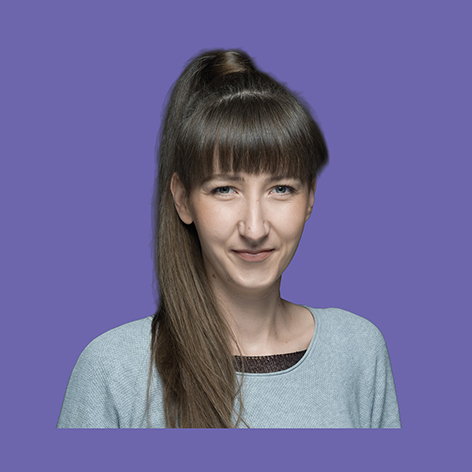
Patrycja Maksylewicz
Intermedia artist
Read full bio
Patrycja Maksylewicz is an intermedia artist. In her work, she focuses on interactive relationships, particularly those between humans and machines. She is interested in the concept of computational creativity and the analysis of biometric data through the language of art. She explores the relationships between different media and the ways in which they are used in both the real and virtual worlds – including in site-specific projects.
She has taken part in exhibitions, workshops and conferences both at home and abroad. Winner of the 2018 Kraków Art Salon competition in the ‘Initiative of the Year’ category. A graduate of the Faculty of Intermedia at the Jan Matejko Academy of Fine Arts in Kraków, where she currently holds the position of assistant professor. She is also associated with the Foundation for the Development of Intermedia Art.
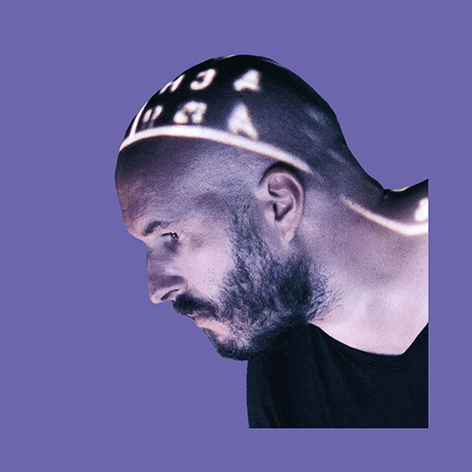
Andreas Lutz
Artist exploring human–machine relationships
Read full bio
Andreas Lutz is an artist who explores the relationship between humans and machines; on this basis, he seeks to create integrated and universal communication systems. He analyses the differences between reality and our perception of it, and portrays them through sculptures, installations and performances. He also creates experimental soundscapes that explore the relationship between semiotics and sound. He is the founder of KASUGA, a Berlin-based interdisciplinary studio and record label.
Lutz’s works were exhibited, amongst others, at the Antarctic Pavilion during the 57th Venice Biennale (Italy), the National Art Centre in Tokyo (Japan), at HeK in Basel (Switzerland), at the Times Art Museum in Beijing (China), at the Sónar+D festival in Barcelona (Spain) and Istanbul (Turkey), and at the B39 Art Bunker in Bucheon (South Korea).
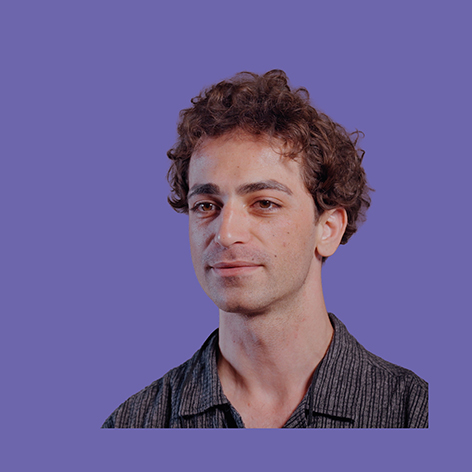
Sefa Sagir
Multimedia artist, creative technologist, musician and performer
Read full bio
Sefa Sagir is a multimedia artist, creative technologist, musician and performer who explores the space between the analogue and digital worlds. He creates interactive audiovisual systems in which gestures, media and data are combined in real time.
He currently focuses on theatre and audiovisual productions. He brings together a variety of fields – art, technology, politics and economics – into cohesive experiences that resonate with audiences.
He has collaborated with the Copernicus Science Centre, the Haus der Kulturen der Welt and the Sapporo International Art Festival in Japan. He teaches new media art at the Polish-Japanese Academy of Information Technology.
Anna Klimczak
Visual artist and curator
Read full bio
Anna Klimczak is a visual artist. She creates site-specific installations and performance pieces. She is a curator of exhibitions and art projects. She has been working at the Polish-Japanese Academy of Computer Technology in Warsaw since 2009.
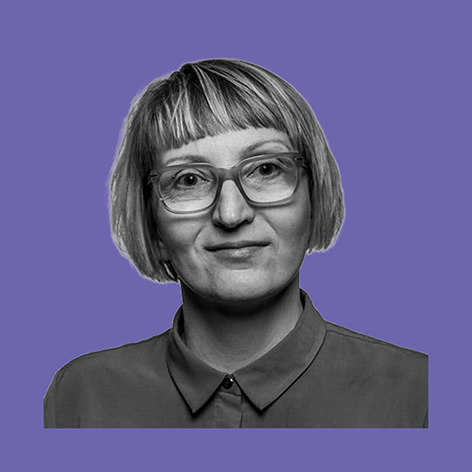
Agnieszka Rayss
Photographer
Read full bio
Agnieszka Rayss – photographer, co-founder of the Sputnik Photos association. She graduated in art history from the Jagiellonian University and completed her doctoral studies at the Poznań Academy of Fine Arts. She lectures at the School of Form at SWPS University. She has published the books ‘Ostatnia rozmowa z akademikiem Sacharowem’ (2022), ‘Z zapisków kolekcjonera’ (2019), ‘Tu się zaczyna koniec miast’ (2015) and ‘American Dream’ (2010).
A two-time winner of the Pictures of the Year competition and a two-time finalist in the Hasselblad Masters Award. She has also won numerous national awards, including at the Grand Press Photo competitions. She lectures at SWPS University.
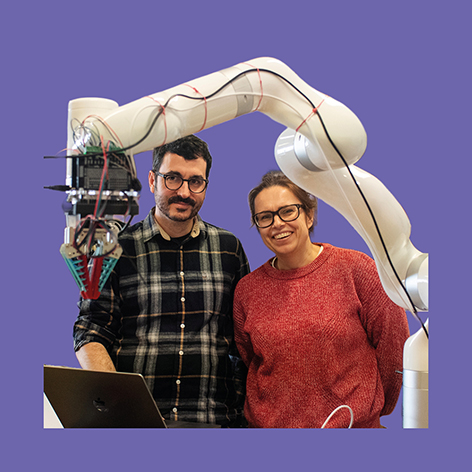
Varvara Guljajeva i Mar Canet Solà
Artists exploring the relationship between art, technology and society;
Read full bio
Varvara & Mar is an artistic duo founded in 2009 by Dr Varvara Guljajeva and Mar Canet Sola. Varvara is Associate Professor of Kinetic Imaging at VCUarts Qatar. Mar is a PhD candidate at Tallinn University.
Their work explores the intersections of art, technology and society, engaging with automation, artificial intelligence, perception, craft and human–machine relationships. Their practice often reflects on how technological systems shape everyday experience.
The duo has exhibited at venues including the Museum of Arts and Design in New York, FACT in Liverpool, Santa Mònica in Barcelona, the Barbican and the V&A in London, the Onassis Cultural Centre in Athens, Ars Electronica in Linz and ZKM in Karlsruhe.
Rafał Kosewski
Exhibition Curator, Dramaturg and Cultural Manager
Read full bio
Rafał Kosewski is an exhibition curator, dramaturg, and cultural manager with many years of experience developing projects at the intersection of art, science, and emerging technologies. He graduated in Cultural Studies from the Institute of Polish Culture at the University of Warsaw. He has collaborated with institutions including the Warsaw Rising Museum, the History Meeting House, the Museum of Warsaw, and the Adam Mickiewicz Institute. Since 2011, he has been affiliated with the Copernicus Science Centre, where he serves as curator of the Przemiany Festival. His interests include futures studies, critical posthumanism, art & science, and the social and cultural implications of emerging technologies.
David Sypniewski
Warsaw SWPS University lecturer and researcher in AI in design
Read full bio
David Sypniewski is a lecturer at SWPS University in Warsaw and a researcher specialising in AI in design. He is the founder and head of the Open Artificial Intelligence Laboratory at the Faculty of Design, a member of the HumanTech Centre, and, as of this year, also the head of the Department of Artificial Intelligence and the Dean’s representative for innovation.
Together with Agnieszka Rayss, he created an exhibition entitled ‘The End of the War’ – a series of paintings enhanced using generative tools. The project received an honourable mention at the FotoLux festival in Lucca. He also designed the eponymous mourning bot for the production of ‘Grief//bot’ at Wrocław’s Kombinat Theatre.
He conducts research into the implementation of artificial intelligence-based tools in the design process. He is working on a PhD on the automation of wayfinding design in refugee centres.
Use Your Head or Ask AI
4 October (Sunday)
2.00 pm – 3.30 pm
Auditorium
What happens to our thinking when we delegate some of the work of analysing, remembering and making decisions to generative AI tools?
We’ll be discussing how artificial intelligence can influence the way our beliefs and decisions are formed. What changes when we use AI-generated suggestions in a search engine? How can you tell whether an answer not only sounds convincing but is actually credible?
We will also look at knowledge as a social process. Knowledge does not emerge from a single mind.: we develop and test it in groups, each of which has its own methods for assessing sources, arguments and experts. In this context, curiosity becomes not only a personal trait, but also a prerequisite for a well-functioning community. During a private conversation with a chatbot, it is easy to reinforce our own line of reasoning, whilst avoiding confrontation with people who might challenge our assumptions and offer different perspectives. Perhaps the ability to test one’s own conclusions against the knowledge of others will be one of the most important skills of the future.
The panel will be held in English with simultaneous interpretation into Polish.
Guests: Prof. Michael Gerlich, PhD (The Human Factor Association), Gabriela Czarnek, PhD (Jagiellonian University), Konrad Talmont-Kamiński, PhD (University of Białystok)
Moderators: Iwo Zmyślony, PhD (University of Warsaw), Jan Król (Copernicus Science Centre)
Prof. dr Michael Gerlich
Researcher studying the impact of AI on critical thinking and decision-making
Read full bio
Michael Gerlich, PhD, is a humanities systems architect, author and internationally recognised adviser on the impact of artificial intelligence on human judgement, agency and decision-making. He investigates what happens when people increasingly entrust intelligent systems with thinking, problem-solving and decision-making. He is also seeking answers to the question of how to maintain curiosity, critical thinking and intellectual independence in the age of artificial intelligence.
He is a co-founder and chairman of The Human Factor Association, and an adviser to governments, international organisations and Fortune 500 companies. His research has been featured in TIME magazine, on the BBC, in the Financial Times and in The Economist. He is the author of the book ‘The Convenience Trap – What Happens When AI Becomes the Mind Behind Our Lives’.

Gabriela Czarnek, PhD
Social psychologist researching beliefs and responses to information
Read full bio
Gabriela Czarnek is an assistant professor at the Institute of Psychology at Jagiellonian University and a Research Affiliate at the Massachusetts Institute of Technology. She examines beliefs about politics and science. She analyses how people shape them, how they respond to information and persuasive communication, and how ideology influences their attitudes towards science and scientists. She is interested in whether artificial intelligence can influence our preferences – both in terms of voting and on scientific matters.
Prof. Konrad Talmont-Kamiński
Philosopher and cognitive scientist researching rationality and the mechanisms of human cognition
Iwo Zmyślony, PhD
Organisational change and culture designer, trainer and business consultant
Read full bio
Iwo Zmyślony, PhD, is a change and organisational culture designer, trainer and business consultant at the ICAN Institute, where he leads training programmes on, amongst other things, neuroleadership and the future skills that cannot be automated. For over twenty years, he has been researching expert knowledge management systems and the psychological and sociological factors underlying innovation processes.
He obtained his PhD with a thesis on the psychological and sociological determinants of creativity in the empirical sciences (know-how, tacit knowledge). Lecturer at the University of Warsaw and on postgraduate and MBA programmes at Łazarski University. Research fellow at the Rzeszów University of Technology named after Ignacy Łukasiewicz.
Member of the Scientific Advisory Board of the Human for Future Foundation. Host of the ‘Limits of AI’ podcast by MIT Sloan Management Review Poland.
Jan Król
Promotion and Communications Coordinator, AI Educator
Read full bio
Promotions and Communications Coordinator at the Copernicus Science Centre, responsible for promoting the ZBADAI educational project, an initiative carried out by the Copernicus Science Centre and the Ministry of National Education. Member of the Working Group on Artificial Intelligence at the Ministry of Digital Affairs, AI educator, expert in digital and media literacy, graduate of the Warsaw School of Economics with a degree in ‘Artificial Intelligence in Business and the Public Sector’.
AI on the couch – mental health in the hands of artificial intelligence
4 October (Sunday)
4.00 pm – 5.30 pm
Auditorium
How much can we entrust to artificial intelligence when our mental health is at stake? AI systems are increasingly capable of analysing the way we write, speak and respond, and of detecting patterns that may escape human observation.
They can support researchers and professionals, help identify warning signs and analyse large datasets. But these capabilities also raise questions about how far we should allow their use to extend.
Drawing on research into mental health, we will explore what makes an AI system trustworthy. Are accurate diagnoses enough if we do not know how the system arrived at them? How should models used in an area as sensitive as mental health be tested and validated? And what happens when an algorithm gets it wrong?
We will also discuss responsibility for decisions made on the basis of AI recommendations. Who should have access to information about our mental health, and under what conditions? How can we protect the data on which these systems rely?
Could a tool designed to detect problems early and offer support also become a tool of surveillance?
Together with experts in artificial intelligence, psychology, philosophy and cognitive science, we will consider where the line lies between useful support and surveillance, and what conditions need to be met before we can trust AI when its recommendations begin to influence decisions about people.
Panel organised in cooperation with the Foundation for Polish Science.
Guests: Inez Okulska, PhD, Marcin Rządeczka, PhD, Maciej Behnke, PhD
Moderators: Monika Biłas-Henne, PhD (Foundation for Polish Science), Jakub Tołkaczewski (Copernicus Science Centre)

Inez Okulska, PhD
Researcher, engineer and AI science communicator
Read full bio
Inez Okulska, PhD, spends her days charming agents, robots and, occasionally, people – she is the Principal AI Innovation Architect at UiPath and a lecturer at the Centre for Trustworthy Artificial Intelligence at the Warsaw University of Technology. PhD in the Humanities and MSc in Automation Engineering; AI researcher and populariser. Creator of numerous models, datasets and algorithms; founder of the Department of Linguistic Engineering and Text Analysis at NASK-PIB; co-founder and former editor-in-chief of hAI Magazine – the first printed quarterly devoted entirely to the subject of artificial intelligence.
Former Director of the Department of Innovation and Technology at the Ministry of Digital Affairs, recognised in the following rankings: Forbes Women’s ‘Top 100 Women in AI’, ‘Top 100 Women in Data Science in Poland’ and ‘25 Women for 2025’. She explains non-human intelligence in human terms across a range of settings and media.
Marcin Rządeczka, PhD
Cognitive scientist and philosopher researching AI in mental health
Read full bio
Marcin Rządeczka, PhD, is a cognitive scientist and philosopher specialising in the applications of artificial intelligence in mental health, computational psychiatry, evolutionary psychopathology and the philosophy of psychiatry.
Deputy Director of the Institute of Philosophy at UMCS and Head of the MultiLab Multimodality Research Laboratory. He has presented his research at over 50 national and international academic conferences, including the Computational Psychiatry Conference 2023 at Trinity College Dublin, AI for Mental Health 2025 at the University of Oxford, ECAI 2025 (28th European Conference on Artificial Intelligence) and IJCAI 2026 (the 35th International Joint Conference on Artificial Intelligence). He has published in, amongst others, Springer Nature, JMIR Mental Health and Psychopathology. He is the author of a monograph on the philosophy of biology entitled ‘Problematyka metafizyczna we współczesnych naukach biologicznych’.
Photo by Anna Amarowicz, taken for the PULSAR project: view the article
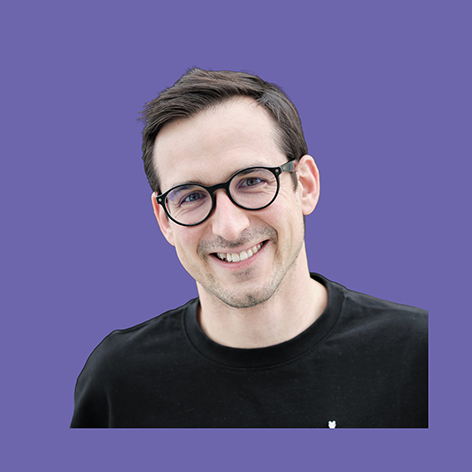
Prof. Maciej Behnke
Psychologist researching emotions and the use of AI in science
Read full bio
Maciej Behnke, PhD is a psychologist and a lecturer at the University of Adam Mickiewicz in Poznań. He explores innovative ways of using existing data and AI technologies to develop research methodologies in the science of emotions. His earlier work focused on understanding how positive psychological phenomena, such as cognitive evaluation, emotions and attitudes, can support the performance of esports players.
Recipient of scholarships from the Foundation for Polish Science, the Minister of Science and Higher Education, and the Foundation of the University of Adam Mickiewicz, the 2026 Malewski Prize of the Polish Academy of Sciences. Project manager for projects funded through NCN calls for proposals. He undertook research placements at Stanford University, University College London and the University of Chieti-Pescara. He is a member of the Governing Board of the Cognitive Neuroscience Centre.
Photo by Władysław Gardasz
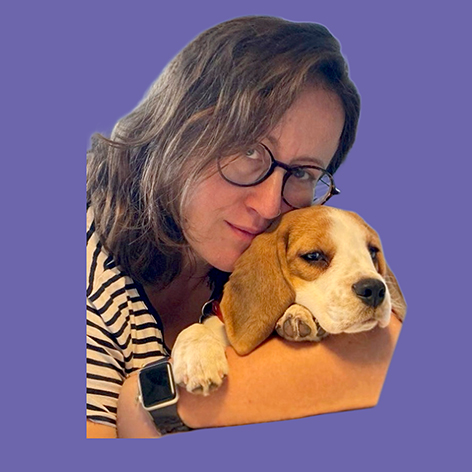
dr Monika Biłas-Henne
Intercultural Psychologist, Science Manager and Lecturer
Read full bio
Monika Biłas-Henne, PhD, is an intercultural psychologist and holds a PhD in the humanities; she is affiliated with the Foundation for Polish Science and SWPS University in Warsaw. She is a research manager and lecturer, as well as an intercultural trainer: she runs training courses on intercultural communication and diversity management. She also worked as a curator for science, education and public diplomacy at the Polish Cultural Institute in New York.
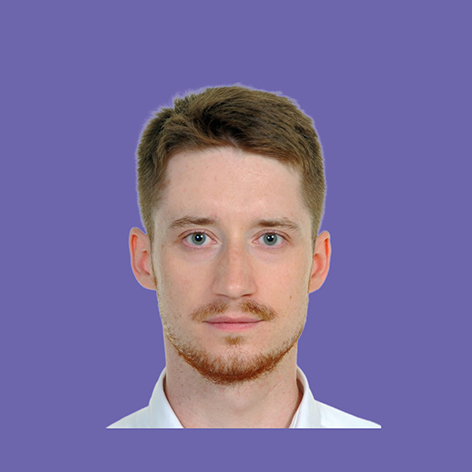
Jakub Tołkaczewski
Event Coordinator and Moderator, Copernicus Science Centre
Read full bio
Jakub Tołkaczewski is the coordinator of the ‘Evenings for Adults’ programme at the Copernicus Science Centre. He was involved in the preparation and delivery of numerous events, including the Ecsite 2025 conference, the Przemiany Festival, the Science Picnic and the Perseid Night, taking responsibility for specific aspects of production, programming and organisation. Between 2024 and 2025, he also acted as a moderator for debates and meetings at the Mazovia Development Forum. He also gained experience as a tutor and manager of arts camps, and by getting involved in organising academic events as a member of the student union at the University of Warsaw.