
Przemiany Festival | October 2-4
Przemiany Festival Opening

Is AI Thinking For You? To mark the opening of the festival, we will put this question to three exceptional guests, who will examine it from very different perspectives.
2 October (Friday)
7.00 pm – 8.30 pm
Auditorium
🕖 8.30 pm – 11.00 pm: opening of the exhibition “In algorithmic translation”
🕖 9.00 pm – 9.45 pm: Abstract Language Model (Live) – a performance by Andreas Lutz
The discussion will be interpreted into Polish Sign Language (PJM) and into English.
The philosopher and essayist Tomasz Stawiszyński, who has for many years been exploring the transformations in contemporary culture and human agency, will reflect on how AI is affecting our intellectual autonomy, imagination and critical thinking.
Jakub Koźniewski, an artist, designer and co-founder of the panGenerator collective, will look at the same question through the lens of artistic practice: how AI influences creativity, the creative process and the relationship between humans and tools.
Monika Jabłońska, PhD, a researcher and educator specialising in digital culture and media education, will examine how the use of generative AI is changing the way we acquire knowledge and develop skills. She will show why a good result does not always mean that we have truly learned something, how AI can create an illusion of knowledge, and when it supports our thinking — and when it begins to do the thinking for us.
Guests:

Tomasz Stawiszyński
Essayist, writer, philosopher
Read full bio
Tomasz Stawiszyński is an essayist, writer, philosopher and author of best-selling books, including: ‘Potyczki z Freudem. Mity, pokusy i pułapki psychoterapii’, ‘Co robić przed końcem świata”, „Ucieczka od bezradności’, ‘Reguły na czas chaosu’, ‘The Powrót fatum’, ‘Ćwiczenia z dysonansu’ and ‘Czynnik alchemiczny’ (release date: 20 May 2026). He also produces the ‘Skądinąd’ podcast (www.patronite.pl/skadinad) and writes columns for ‘Tygodnik Powszechny’.
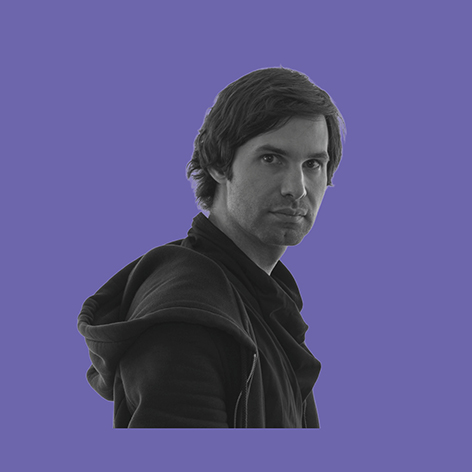
Jakub Koźniewski
Designer and new media artist
Read full bio
Jakub Koźniewski is a designer and new media artist, and co-founder of the panGenerator collective, which works at the intersection of art, design and new technologies.
For many years, he co-led the Creative Coding postgraduate programme at the School of Form, and from 2022 to 2024 he taught at Pracownie Gościnne (Guest Studios) at the Faculty of Design of the Academy of Fine Arts in Warsaw. In his individual practice, he approaches
new technologies from a critical, post-digital perspective, combining digital media with physical matter and giving ephemeral ideas minimalist forms.
panGenerator’s projects have been presented at Ars Electronica, ZKM Karlsruhe, the WRO Biennale, Milan Design Week, Dutch Design Week and SXSW, among others. The collective has received numerous awards, including an Honorary Mention at Prix Ars Electronica, a Cannes Golden Lion and a Paszport Polityki award in the Digital Culture category.

dr Monika Jabłońska
Digital culture and media education researcher
Read full bio
Monika Jabłońska, PhD, specialises in digital culture, media education and young people’s ability to critically analyse media content. Her research focuses on how young people assess the credibility of information and recognise persuasion, clickbait, fake news and other forms of seemingly reliable content. She is the author of the book Kompetencje medialne generacji Z. Pomiar – diagnoza – kształcenie.
She is a member of the Adam Mickiewicz University team participating in the PIAST AI consortium, where she is responsible for expert and communication activities related to the social dimensions of artificial intelligence and for disseminating knowledge about AI.
She is also the author of the Podejrzanie wiarygodne project, developed as part of the ZBADAI programme at the Copernicus Science Centre.
After the discussion
Following the discussion, we invite you to the opening of the festival exhibition ’In algorithmic translation’ and Andreas Lutz’s audiovisual performance ‘Abstract Language Model (Sync)’. The artist will combine abstract symbols generated by a neural network with sound and light to create an intense, ever-changing composition. The starting point will be the question of whether artificial intelligence can develop its own, non-human system of communication.