
Przemiany Festival | October 2-4
‘In algorithmic translation’ Exhibition

We are increasingly coming to understand the world through the lens of algorithms. Artificial intelligence is becoming an intermediary between us and reality. It processes data and recognises patterns to generate new content, create evocative simulations and uncover relationships that we might not otherwise notice. Like any translation, this one is not neutral either.
Conference centre (ground floor, first floor)
2 October (Friday):
🕖 1.00 pm – 2.00 pm curator-led tour of the exhibition (preview)
8.30 pm – 11.00 pm (exhibition opening)
3 October (Saturday): 🕖 11.00 am – 10.00 pm
4 October (Sunday): 🕖 11.00 am – 8.00 pm
Algorithms organise the world according to their own rules. Some data highlight certain aspects, whilst others omit them; they create new categories and suggest different interpretations. Sometimes they lose sight of the context, fail to distinguish between facts and opinions, or simply make things up, presenting content that sounds credible but is unsubstantiated. The way in which information is organised therefore influences what we perceive and the picture of reality we construct. How do algorithms explain the world to people, and how do they change the very process of understanding it?
What will you see at the exhibition?
The creators of the ‘In algorithmic translation’ exhibition are attempting to answer these questions from various perspectives. At the exhibition, you’ll see, amongst others, a robot trying to find a needle in a haystack. The rhythm of human breathing will be translated into drawings and computer graphics, whilst interactive installations will respond to visitors’ voices and presence. Historical war photographs, in turn, will be used to generate what the original images do not show – plausible images, suspended between collective memory and simulation. You’ll also see a new language created by a neural network. It is an abstract system of signs that raises the question of whether machines can develop their own forms of communication.
Some projects look inside AI systems, whilst others test the limits of their effectiveness or use the technology to transform the human experience. What they have in common is the question of what is preserved, what disappears, and what only emerges as a result of algorithmic translation. And who, exactly, gives meaning to what we end up with at the end of this process – a human being or a machine?
In many ways, the exhibition allows visitors to experience the world as interpreted by algorithms – through images, sound, language, movement, light and even their own breathing. Rather than confining artificial intelligence to screens and interfaces, it presents it as part of a broader technological environment that is having an ever-greater influence on how we remember, create, categorise and interpret the world.
Exhibition participants: Paweł Janicki, Dawid Konopka, Jakub Koźniewski, Andreas Lutz, Patrycja Maksylewicz, Agnieszka Rayss & David Sypniewski, Sefa Sagir & Anna Klimczak, Varvara & Mar, studio Dotdotdot
Exhibition curator: Rafał Kosewski
Texts: Patrycja Strzetelska
Coordinator: Jula Skauronskaya
Design and execution: Lotne Studio
Technical supervision: Rafał Zarzeka
About the participants:
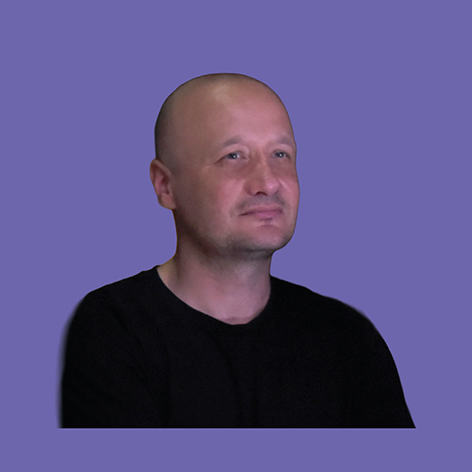
Paweł Janicki
New media artist and curator
Read full bio
Paweł Janicki – a new media artist and curator – draws primarily on developments in music, contemporary art, media art and posthumanist practice, whilst constructing forms that differ from those seen to date. He employs a wide range of techniques, approaches and protocols: he creates works that utilise synthetic senses, programming techniques and elements of spatial and materials engineering. Historical and contemporary contexts play a significant role in his work – in particular, the history of art and what might be called the history of thought.
He sits on the board of trustees of the WRO Art Centre and has recently collaborated with the Funken Academy, Fraunhofer IWU and the pan-European ArtCast4D/AAASeed project. He was the curator of the Polish Pavilion at the Gwangju Biennale in South Korea. The Algorithms Association cites his net-based performances as key events in the development of this art form.
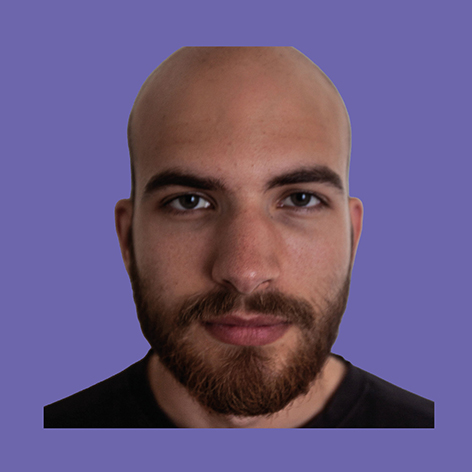
Dawid Konopka
Interdisciplinary artist
Read full bio
Dawid Konopka is an interdisciplinary artist and a graduate of the Faculty of Media Arts at the Academy of Fine Arts in Warsaw.
In his work, he uses object art, performance, photography and video as tools to explore the boundaries of subjectivity, its entanglement in imposed structures, and the possibilities for emancipation in the face of these structures. He analyses how value systems influence the development of the individual and their relationship with the surrounding world. He is interested in exploring alternative forms of presence and constructing situations in which the creative gesture opens up a space for a more direct experience, whilst confronting its limits.
His works have been exhibited at venues including the Ujazdowski Castle Centre for Contemporary Art, Zachęta – National Gallery of Art, the Labirynt Gallery and the Polish Institute in Rome.
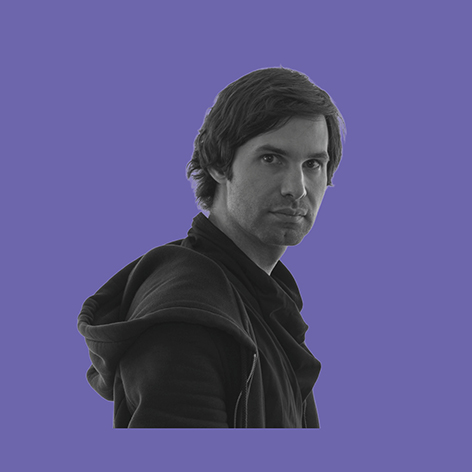
Jakub Koźniewski
Designer and new media artist
Read full bio
Jakub Koźniewski is a designer and new media artist, and co-founder of the panGenerator collective, which creates work at the intersection of art, design and new technologies.
For many years, he co-led the Creative Coding postgraduate programme at the School of Form, and from 2022 to 2024 he taught on the Visiting Lectures programme at the Faculty of Design of the Academy of Fine Arts in Warsaw. When creating individual projects, he examines new technologies from a critical, post-digital perspective, combining digital media with physical matter and encapsulating ephemeral ideas in minimalist forms.
The panGenerator group’s projects have been exhibited at, amongst others, Ars Electronica, the ZKM in Karlsruhe, the WRO Biennale, Milan Design Week, Dutch Design Week and SXSW. The collective has received, amongst other awards, an Honourable Mention at the Prix Ars Electronica, the Cannes Golden Lion and the ‘Polityka’ Passport Award in the Digital Culture category.
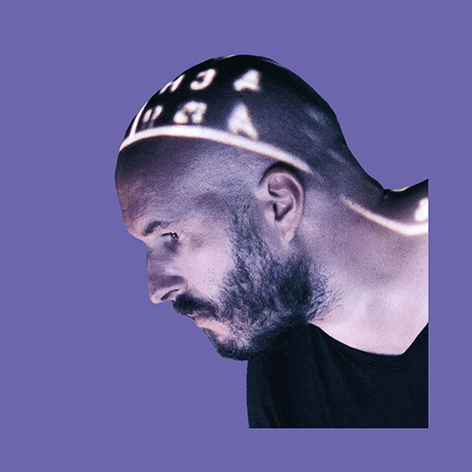
Andreas Lutz
Artist exploring human–machine relationships
Read full bio
Andreas Lutz is an artist who explores the relationship between humans and machines; on this basis, he seeks to create integrated and universal communication systems. He analyses the differences between reality and our perception of it, and portrays them through sculptures, installations and performances. He also creates experimental soundscapes that explore the relationship between semiotics and sound. He is the founder of KASUGA, a Berlin-based interdisciplinary studio and record label.
Lutz’s works were exhibited, amongst others, at the Antarctic Pavilion during the 57th Venice Biennale (Italy), the National Art Centre in Tokyo (Japan), at HeK in Basel (Switzerland), at the Times Art Museum in Beijing (China), at the Sónar+D festival in Barcelona (Spain) and Istanbul (Turkey), and at the B39 Art Bunker in Bucheon (South Korea).
Patrycja Maksylewicz
Intermedia artist
Read full bio
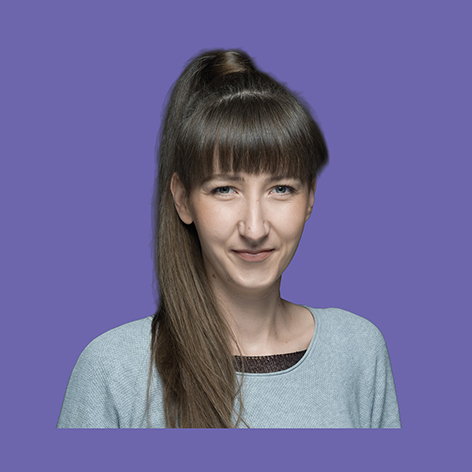
Patrycja Maksylewicz is an intermedia artist. In her work, she focuses on interactive relationships, particularly those between humans and machines. She is interested in the concept of computational creativity and the analysis of biometric data through the language of art. She explores the relationships between different media and the ways in which they are used in both the real and virtual worlds – including in site-specific projects.
She has taken part in exhibitions, workshops and conferences both at home and abroad. Winner of the 2018 Kraków Art Salon competition in the ‘Initiative of the Year’ category. A graduate of the Faculty of Intermedia at the Jan Matejko Academy of Fine Arts in Kraków, where she currently holds the position of assistant professor. She is also associated with the Foundation for the Development of Intermedia Art.
Agnieszka Rayss
Photographer
Read full bio
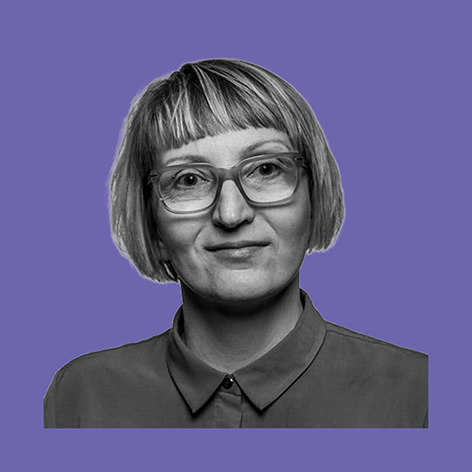
Agnieszka Rayss – photographer, co-founder of the Sputnik Photos association. She graduated in art history from the Jagiellonian University and completed her doctoral studies at the Poznań Academy of Fine Arts. She lectures at the School of Form at SWPS University. She has published the books ‘Ostatnia rozmowa z akademikiem Sacharowem’ (2022), ‘Z zapisków kolekcjonera’ (2019), ‘Tu się zaczyna koniec miast’ (2015) and ‘American Dream’ (2010).
A two-time winner of the Pictures of the Year competition and a two-time finalist in the Hasselblad Masters Award. She has also won numerous national awards, including at the Grand Press Photo competitions. She lectures at SWPS University.

David Sypniewski
Warsaw SWPS University lecturer and researcher in AI in design
Read full bio
David Sypniewski is a lecturer at SWPS University in Warsaw and a researcher specialising in AI in design. He is the founder and head of the Open Artificial Intelligence Laboratory at the Faculty of Design, a member of the HumanTech Centre, and, as of this year, also the head of the Department of Artificial Intelligence and the Dean’s representative for innovation.
Together with Agnieszka Rayss, he created an exhibition entitled ‘The End of the War’ – a series of paintings enhanced using generative tools. The project received an honourable mention at the FotoLux festival in Lucca. He also designed the eponymous mourning bot for the production of ‘Grief//bot’ at Wrocław’s Kombinat Theatre.
He conducts research into the implementation of artificial intelligence-based tools in the design process. He is working on a PhD on the automation of wayfinding design in refugee centres.
Sefa Sagir
Multimedia artist, creative technologist, musician and performer
Read full bio
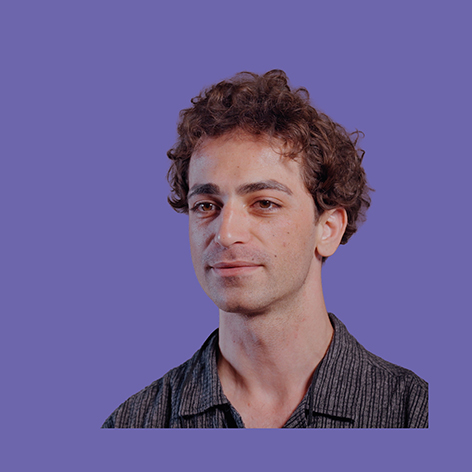
Sefa Sagir is a multimedia artist, creative technologist, musician and performer who explores the space between the analogue and digital worlds. He creates interactive audiovisual systems in which gestures, media and data are combined in real time.
He currently focuses on theatre and audiovisual productions. He brings together a variety of fields – art, technology, politics and economics – into cohesive experiences that resonate with audiences.
He has collaborated with the Copernicus Science Centre, the Haus der Kulturen der Welt and the Sapporo International Art Festival in Japan. He teaches new media art at the Polish-Japanese Academy of Information Technology.
Anna Klimczak
Visual artist and curator
Read full bio
Anna Klimczak is a visual artist. She creates site-specific installations and performance pieces. She is a curator of exhibitions and art projects. She has been working at the Polish-Japanese Academy of Computer Technology in Warsaw since 2009.
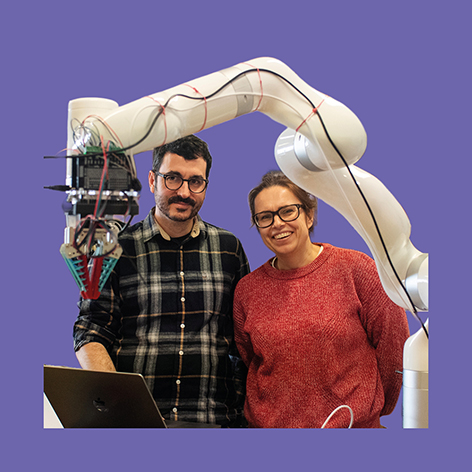
Varvara & Mar
Artists exploring the relationship between art, technology and society
Read full bio
Varvara & Mar is an artistic duo founded in 2009 by Dr Varvara Guljajeva and Mar Canet Sola. Varvara is Associate Professor of Kinetic Imaging at VCUarts Qatar. Mar is a PhD candidate at Tallinn University.
Their work explores the intersections of art, technology and society, engaging with automation, artificial intelligence, perception, craft and human–machine relationships. Their practice often reflects on how technological systems shape everyday experience.
The duo has exhibited at venues including the Museum of Arts and Design in New York, FACT in Liverpool, Santa Mònica in Barcelona, the Barbican and the V&A in London, the Onassis Cultural Centre in Athens, Ars Electronica in Linz and ZKM in Karlsruhe.
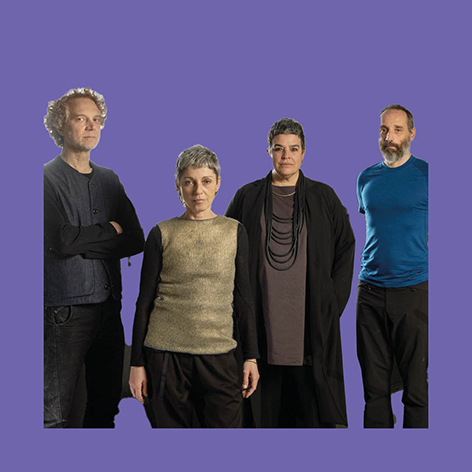
Studio Dotdotdot
Applying interaction design to architecture and exhibition design
Read full bio
Dotdotdot has been a pioneer in applying interaction design to architecture and exhibition design since 2004. The studio designs digital architectures and user experiences for complex buildings — such as museums, libraries, and showrooms —, narrative environments and immersive installations for cultural institutions, companies, and foundations. Its working method places at its center the active engagement and physical and cognitive inclusion of people, the environment, and technological research.
Always mindful of designers' social responsibility, in 2014 Dotdotdot founded OpenDot, a research hub that became a nonprofit foundation in 2025, which promotes innovation through participatory design, open-source technology, and the active involvement of communities, fostering the development of shared solutions.