Dzięki nauce rozwijamy edukację:
Research and development projects
Copernican Revolution Lab (CRL), initiated by the Copernicus Science Centre (CSC), is the first research and development center in Poland where the focus of scientists and researchers is on learning and developing 21st-century competencies in STEAM education (Science and Technology, interpreted through Engineering and the Arts) and studying social engagement in science.
Research and development projects are a crucial element of contemporary scientific and technological development. They are structural and strategic initiatives aimed at conducting interdisciplinary research, developing new technologies, fostering innovation, and discovering new information to solve existing social, economic, and scientific problems.

CRL is an interdisciplinary space for scientific exploration and education, combining knowledge development with practice and entrepreneurship. In the workshop, scientists from various fields investigate the relationship between teaching methods in natural and exact sciences and the processes of learning and competency development. The research and development work of PPK involves acquiring, combining, shaping, and utilizing current knowledge and skills for production planning, as well as creating and designing new educational products and services.
Projects:
DigiPatch investigates the interaction between psychological needs and digital media use in the social sphere and processes of identity formation and protection.
The main aim of the project is threefold. It will:
- investigate how digital media creates conditions for cultural and societal change from a traditionally networked society to a rigidly ‘patchwork’ one.
- find out why this occurs, with a focus on cultural factors, and the socio-cognitive processes of individuals.
- outline what the potential societal consequences of these processes are.
DigiPatch is a part of CHANSE, Collaboration of Humanities and Social Sciences in Europe, which is a joint initiative of 27 research funding organisations from 24 countries. The main goal of the CHANSE initiative is to launch a transnational call for collaborative projects focused on the topic of Transformations: Social and cultural dynamics in the digital age.
The Copernicus Science Centre is a member of the DigiPatch project team, responsible for implementing the Knowledge Exchange component.
As part of our activities, we will be responsible for the implementation of the Knowledge Exchange component, which includes:
- Organizing international workshops on prototyping solution scenarios related to the mechanisms of functioning and isolation of narrow social groups on the internet, in collaboration with The German Institute for Radicalization and De-radicalization Studies (GIRDS) in Prazewrótka Kopeŕnickańska.
- The workshops aim to create an intervention scenario that promotes openness among members of radicalizing groups towards contact, relationships, and collaboration with others. The participants of the workshops will be representatives of social stakeholders in the project: educators, artists, researchers, and social activists from Poland, Germany, Sweden, Spain, and the United Kingdom.
- We will develop a project knowledge map together with scientists and representatives of non-formal education from Poland, Germany, Sweden, and Spain.
- In the LivingLab, we will design a research station that will collect data for one of the project's research areas during exhibitions at the Copernicus Science Centre.
- We will promote the project results through scientific conferences in Poland and abroad.
Project coordinator from the Copernicus Science Centre: Szymon Filipowicz.
- More about project: road-steamer.eu
- To know more follow the CHANCE website: chanse.org/funded-projects
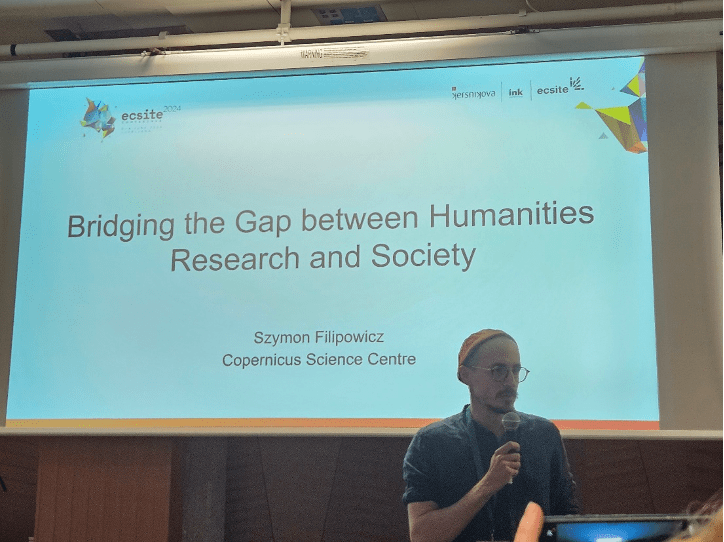
Building a Bridge Between Humanities Research and Society
Presentation at the ECSITE Conference, 1–4 June 2024, Ljubljana
Author
Szymon Filipowicz
Abstract
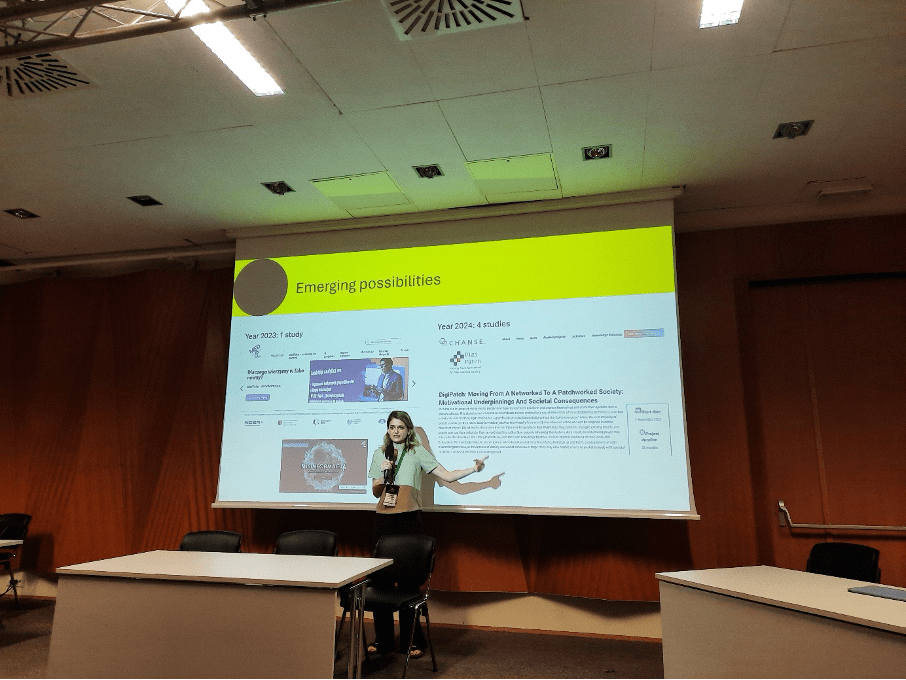
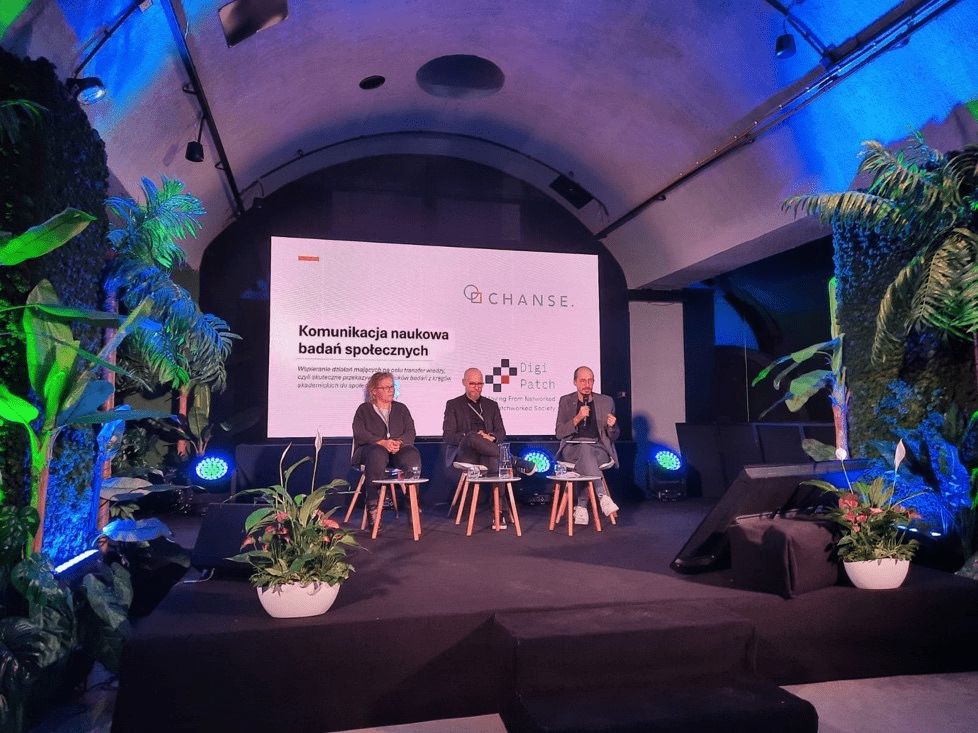
The presentation explored the concept of a knowledge transfer map, currently being developed by the Copernicus Science Centre as part of the DigiPatch project. The map addresses the diverse needs of stakeholders from five EU countries — the United Kingdom, Spain, Sweden, Germany, and Poland — and offers researchers a practical tool for navigating the complex landscape of public expectations.
By identifying key channels of communication and engagement, the map supports more effective transfer of knowledge between humanities research and society.
Research at Exhibitions in Museums and Science Centres
Presentation at the ECSITE Conference (1–4 June 2024), Ljubljana
Authors
-
Katarzyna Potęga vel Żabik (Copernicus Science Centre)
-
Szymon Filipowicz (Copernicus Science Centre)
-
Prof. Małgorzata Kossowska (Centre for Social Cognitive Studies, Jagiellonian University)
-
Dr Maartje Raijmakers (NEMO Science Museum)
-
Dr Rooske Franse (NEMO Science Museum)
Abstract
Contemporary science centres and museums operate at the intersection of public engagement, education, and academic research. This session focused on exploring how these unique spaces can serve as platforms for conducting social and psychological studies.
The goal was to foster a three-way dialogue between science centres, visitors, and academic researchers — creating an environment where scientific inquiry and public curiosity come together.
On one hand, museums provide fertile ground for engaging diverse audiences and communicating current scientific approaches and findings in accessible ways. This dual role helps to bridge the gap between science and society, while also enriching the academic landscape with new, practice-based insights.
On the other hand, the dynamic and unpredictable nature of museum environments presents researchers with specific challenges — particularly in maintaining experimental control. These limitations require thoughtful adaptation of methods and a deeper understanding of how to design research that respects both scientific rigour and the visitor experience.
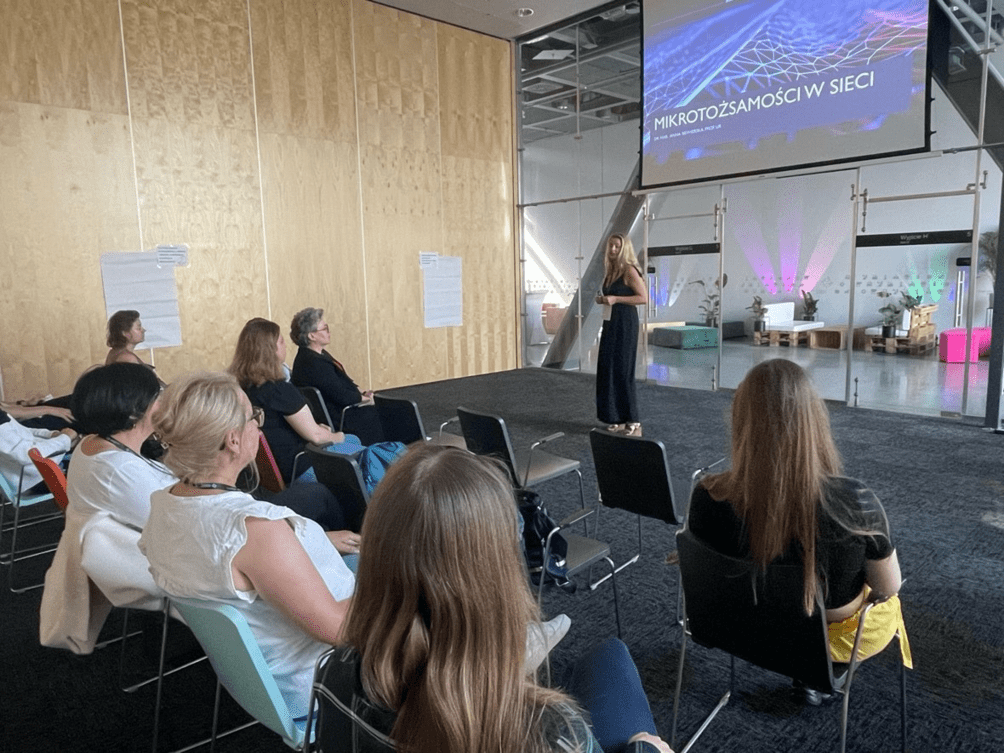
Counteracting Radicalism: Using DigiPatch Research in Education
Led by: Prof. Anna Siewierska, Dr Marta Sałkowska, Szymon Filipowicz
(Intervention workshop during the Show–Convey conference, 22–23 August 2024, Copernicus Science Centre)
The workshop explored how research on (micro)groups and radicalisation processes can inform and enhance educational practice. Together with participants, we reflected on how scientific insights can be meaningfully applied in learning environments.
The session was divided into two parts. In the first, Prof. Anna Siewierska presented findings from the DigiPatch research project. In the second, we worked collaboratively to explore the following key questions:
- In which educational contexts is it valuable to use scientific research?
- How can research findings be meaningfully translated into classroom practice?
- When do scientific insights actively support the learning process?
- What are the benefits of integrating research into everyday education?
- What tools or strategies can help educators apply scientific knowledge effectively?
Drawing on shared ideas and workshop materials, we co-created a draft scenario for educational workshops aimed at addressing group dynamics and counteracting radicalisation in schools.
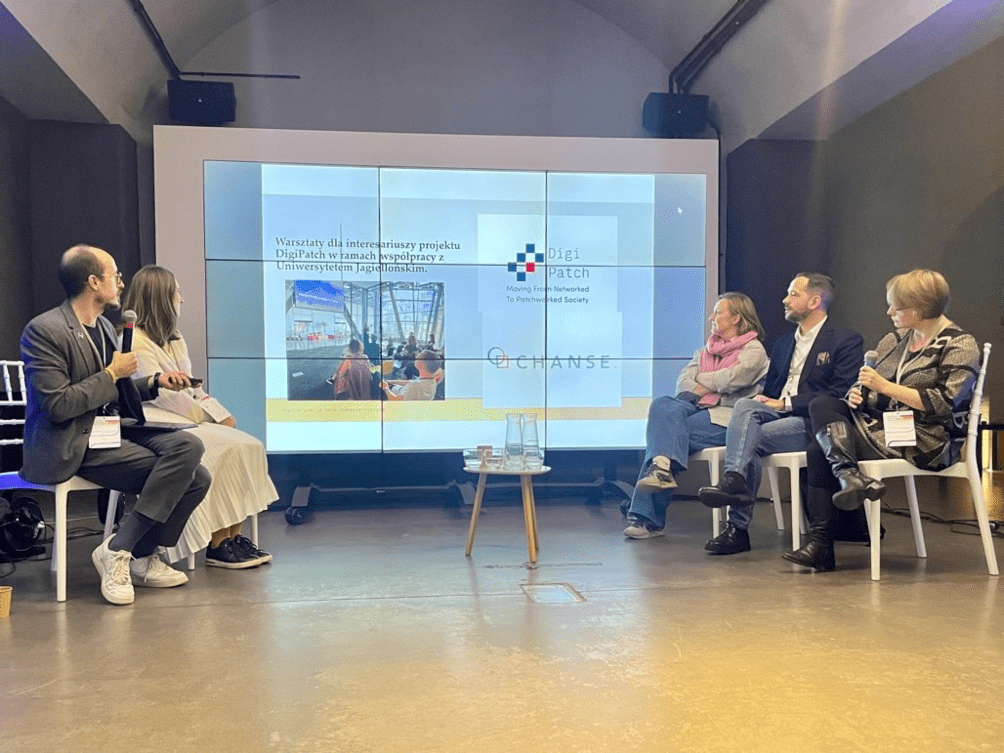
How to popularise the humanities?
Presentations from the Integration–Interaction conference (12–14 November 2024, Hydropolis)
Speakers
- Izabela Rosińska – Cultural animator at the Centre of Modern Times "Młyn Wiedzy"
- Michał Młotek – Historian, populariser, local government official, councillor, and community activist
- Szymon Filipowicz – Researcher at the Copernican Revolution Lab (Copernicus Science Centre)
- Michał Ślubowski – Science specialist at Hevelianum
- Karolina Perrin – Deputy Director for Programmes at the Małopolska Science Centre Cogiteon
Abstract
Unlike the exact sciences, the humanities are often undervalued. Their contributions are frequently overlooked, and they are sometimes not even recognised as a part of science. At the same time, the humanities rely heavily on language — which creates a unique challenge for those trying to present their content in ways that are engaging, accessible, and go beyond text alone.
During this panel, the speakers will share their experiences in promoting the humanities and social sciences. The discussion will also explore how to engage young audiences in ‘humanistic’ activities and increase their participation.
One of the highlighted examples is the DigiPatch project. It served as a case study for designing an educational workshop scenario that helps counter the formation of micro-groups and the radicalisation process.
Jak popularyzować nauki humanistyczne?
(Wystąpienia podczas konferencji Integracja-Interakcja (12-14.11.2024) w Hydropolis)
Autorzy:
- Izabela Rosińska: Cultural animator at the The Centre of Modern Times "Młyn Wiedzy."
- Michał Młotek: Historian popularizer, local government official, councilor, and community activist.
- Szymon Filipowicz: Research Department at the Copernican Revolution Lab (Copernicus Science Centre)
- Michał Ślubowski: Science specialist at Hevelianum.
- Karolina Perrin: Deputy Director for Programs at the Małopolska Science Centre Cogiteon.
Abstrakt:
W przeciwieństwie do nauk ścisłych, rola szeroko rozumianej humanistyki jest niedoszacowana, jej dokonaniom nie nadaje się dużego znaczenia, czasami nie utożsamia jej się z nauką w ogóle. Jednocześnie humanistyka oparta jest przede wszystkim na słowie, co stanowi niezwykłe wyzwanie dla popularyzatorów, aby jej treści przedstawiać w sposób inny niż tekstowy i atrakcyjny. W trakcie dyskusji paneliści i panelistki opowiedzą o swoich doświadczeniach z popularyzacją nauk humanistycznych i społecznych. W dyskusji poruszymy także temat zwiększenia partycypacji młodzieży w takich „humanistycznych” działaniach.
Podczas sesji na przykładzie projektu DigiPatch został opisany przykład warsztatów, które miały na celu wypracowanie scenariusza warsztatu edukacyjnego w tematyce przeciwdziałania tworzeniu się (mikro)grup oraz procesom radykalizacji.
Road-STEAMer
The main goal of the Road-STEAMer consortium within the ECSITE network (European network of science centres and museums) is to work on recommendations for effectively implementing STEAM solutions in education in European Union countries.
The aim of the Road-STEAMer consortium under the Horizon Europe program is to attempt to develop a "roadmap" for implementing STEAM-based solutions in education across all European Union countries, in order to:
- Poduce better knowledge and shared understanding of Europe’s particular educational needs and how STEAM can address them.
- Eexplore the opportunities arising through STEAM for integrated science learning approaches and synergies.
- Study those policy deficiencies that hinter the impactful adoption of STEAM approaches in Europe’s science education landscape.
The tasks of the Copernicus Science Centre include organizing two dialog sessions where experts from various fields related to education can exchange their experiences. We will collect and analyze information on STEAM-based educational policy and examine grassroots STEAM solutions available in the Polish market. More about project: https://www.road-steamer.eu/
Project coordinator from the Copernicus Science Centre: Szymon Filipowicz.
- STEAM context, concepts and conditions: Socio-economic context and relevant needs
This document focuses on the socio-economic context and needs for STEAM in education in Europe. The exploration of these needs and contexts is methodologically based, firstly, on desk research including literature review and secondary data analysis and secondly, on a co-creation workshop with consortium members. - The Road-STEAMer Community
This work describes how the Road-STEAMer Community of stakeholders is being formed and managed by applying the participatory methodology and drawing on extensive networks and numerous previous and running projects and initiatives in STEAM education and beyond with strong stakeholder engagement elements.
The main objective of the Road-STEAMer consortium within the Ecsite network – a European network of science centres and museums – is to develop recommendations for effective ways of introducing STEAM solutions in education across European Union countries. As part of the Horizon Europe programme, the Road-STEAMer consortium aims to develop a roadmap for the implementation of STEAM-based solutions in education in all European Union countries.
The Copernicus Science Centre's task is to organise two dialogue sessions during which experts from various fields related to education will exchange experiences. We will collect and compile information on STEAM-based education policy and analyse grassroots STEAM solutions available on the Polish market.
More about the project
Project coordinator from the Copernicus Science Centre: Szymon Filipowicz
- Keywords: STEM, tablets, smartphones, measuring devices, educational kit, Orbium, Samsung
- Duragion: January 2024 – September 2025
- Project Coordinator: Kamil Wachol
- Contact: szkolaztechnologia@kopernik.org.pl
- Partner: Samsung
- Funding: The project is carried out in partnership with Samsung as part of the R&D activities of the Copernicus Science Centre.
Project Description
Education of the future is not about simply replacing books and notebooks with screens. It’s about expanding the forms of learning through the possibilities offered by evolving technologies. This is the guiding principle of the “School With Technology” project. Mobile devices are a natural environment for today’s students. When used to facilitate independent discovery and experimentation, they can significantly benefit the learning process.
To enable this shift, we developed an educational kit that leverages mobile devices for teaching and learning. The project produced ready-to-use lesson plans and methodological materials. We made sure that they are well grounded in the realities of everyday school life.
The prototype of the kit and lesson scenarios were created in collaboration with the winners of a competition that launched the project. At later stages, we also engaged students, technology experts from Samsung, and researchers specializing in learning and teaching. The prototype is currently being tested in classroom settings. Once finalized, the kit, along with the lesson plans and training package, will be distributed to schools across Poland.
Project Goals
- To develop and implement educational solutions that integrate mobile technologies – tools natural to today’s students – into Polish schools.
- To promote the use of mobile devices as valuable tools in both formal and informal education.
Project Stages
Studying Existing Technology Use in Education
We began by conducting research to better understand how students and teachers currently use technology in educational settings. We analysed the experiences of teachers who already integrate technology into their lessons, including the challenges they face. This part of the project was led by the Future Skills Research Department at the Copernicus Science Centre.
Teacher Competition
We invited teachers to participate in a nationwide competition and then to co-create the educational solutions. Over 230 teachers took part, and 12 were selected to help develop lesson scenarios using mobile devices. They worked closely with the Educational Solutions Department of the Copernicus Science Centre.
Prototyping and Testing of Lesson Scenarios
Our experts posed a challenge to the authors of the competing scenarios: all activities had to support the development of collaboration skills, and technology could not serve merely as an add-on to the lesson – its use had to be essential for completing specific tasks. This approach resulted in a set of lesson scenarios covering nearly all school subjects, with activities designed to be interdisciplinary. The completed scenarios were tested both at the Copernicus Science Centre and in schools. Around 500 students and 30 teachers took part in the testing phase.
School Recruitment
We recruited 25 schools to take part in prototype testing.
The Product
ORBIUM – an interdisciplinary educational kit that harnesses the potential of mobile devices in teaching and learning.
Research Team
Copernicus Science Centre
Marta Sałkowska, PhD, Katarzyna Potęga vel Żabik, Maciej Skorko
SWPS University
Karol Jachymek, PhD
During a year-long research and development project in collaboration with Moje Bambino, we explored the potential of educational spaces in Polish schools. What possibilities do these spaces offer? Do teachers and students notice them? Can they use them effectively?
More about the project: www.kopernik.org.pl/przestrzenie-edukacji
Keywords: civic science, biodiversity, environmental protection, genetic research
Duration: September 2024 – December 2025
Coordinators: Agata Bieniasz, Agnieszka Grochowska
Contact: agata.bieniasz@kopernik.org.pl
Partner: Institute of Evolutionary Biology, University of Warsaw
Project description
“Genetic mushroom picking” is a citizen science initiative run by the Copernicus Science Centre in collaboration with the Institute of Evolutionary Biology, University of Warsaw. The project is part of FunDive, a research effort exploring fungal biodiversity across Europe.
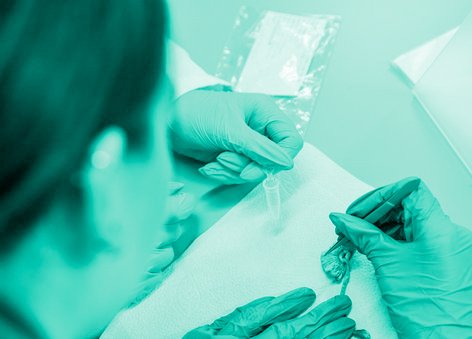
Together, we developed a workshop scenario that introduces students to practical molecular biology. Participants independently isolate fungal DNA using modern lab techniques and upload the results to a shared European database. This hands-on experience builds valuable skills and contributes to environmental protection and biodiversity research.
Project objectives
Equip students with practical skills in molecular biology and introduce modern research methods.
Engage students in fungal DNA isolation and data entry into a European research database.
Promote citizen science and active public involvement in research.
Support fungal biodiversity protection efforts in Europe.
Project progress
1. Collecting samples
Participants gathered fungal fruiting bodies and recorded them in the pan-European database.
2. DNA isolation and sequencing
During workshops at the Copernicus Science Centre and partner institutions, participants isolated DNA from collected samples and learned about biodiversity and environmental challenges. They then prepared the material for sequencing.
3. DNA analysis and classification
Using bioinformatics tools, participants analysed DNA sequences and compared them with known species databases. This helped determine whether the fungi belonged to existing species or possibly represented new ones.
Product
A ready-to-use workshop scenario for organised school groups, now part of the Laboratoria Kopernika offer.
Why it matters
This project brings together education, science, and environmental action. Participants gain lab experience that may inspire future study or careers. The collected data supports European efforts to monitor and protect fungal biodiversity.
To date, DNA has been successfully isolated from 250 fungal samples, including 100 prepared at the CNK laboratories, representing 50 species. The ultimate goal is to gather data on 500 species, which may inform conservation decisions.
The initiative also builds environmental awareness and interest in science through direct public engagement.
Research team
Copernicus Science Centre - Agata Bieniasz, Agnieszka Grochowska, Elżbieta Turek
Institute of Evolutionary Biology, University of Warsaw - Dr Julia Pawłowska
Learn more - Project website: FunDive
- Keywords: microplastics, environmental awareness, biodiversity, living organisms, environmental impact
- Duration: August 2024 – June 2025
- Project Coordinators: Agata Bieniasz, Kacper Owczarek
- Contact: agata.bieniasz@kopernik.org.pl
- Partner: Department of Hydrobiology, University of Warsaw
Project Description
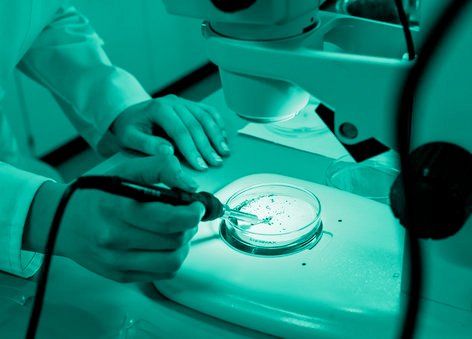
The aim of this project was to create an engaging educational workshop scenario that increases student awareness of microplastics in the environment and their effects on biodiversity. Entitled “Microplastics: Tiny Particles – Big Consequences?”, the scenario was developed as a research and development initiative by the Copernicus Science Centre in collaboration with the Department of Hydrobiology at the University of Warsaw. The scenario was shaped through a research-driven process that included a series of consultations with scientists and a field visit to the hydrobiological research station in Pilchy. During this visit, educators had the opportunity to gain hands-on knowledge and experience. The resulting workshop design fosters ecological sensitivity and allows participants to perform experiments that help them identify microplastics and observe their impact on living organisms.
Project Stages
Concept Development
After establishing cooperation with the University of Warsaw, we organised technical and content workshops at the Copernican Revolution Lab and a field trip to the Masurian Lake District (Pilchy) to collect microplastic samples from a lake. A dedicated project team then developed initial concepts for the experiments and accompanying narrative.
Iterative Prototyping
In the laboratory, the team tested experimental procedures and research methods and conducted content validation. Once the main components of the scenario were designed, we ran prototype sessions with external participants. Based on feedback, we refined the scenario and conducted test sessions with a school group. In the final prototyping stage, we developed two alternative versions of the workshop, differing in one key experiment. Further testing and analysis led to the selection of the final version.
Implementation and Ongoing Development
Before introducing the workshop into the Copernicus Science Centre’s educational offerings for school groups, we trained staff from the Laboratory Department and prepared the lab infrastructure. The scenario is currently being implemented and evaluated in the Labs.
The Product
A structured workshop scenario for organised groups, implemented as part of the Laboratory Department’s educational offerings at the Copernicus Science Centre.
Value and Impact
The project outcomes have both educational and practical value. Participants gain knowledge about microplastics and learn how to identify them. The scenario can be used in informal education settings to support young people in developing both ecological awareness and scientific research skills.
Research Team
Copernicus Science Centre
Agata Bieniasz, Kacper Owczarek, Natalia Urban, Aleksandra Wróblewska, Marta Kodura, Krzysztof Zieleniewski, Magda Anusz, Agnieszka Grochowska
Department of Hydrobiology, University of Warsaw
Ewa Babkiewicz, PhD, Magdalena Michalska-Kacymirow, PhD
- Keywords: Young Girl Builders, renewable energy, engineering careers
- Duration: 2024
- Project Coordinator: Magdalena Puczko, PhD
- Contact: magdalena.puczko@kopernik.org.pl
- Partners: Erbud S.A., Onde S.A.
- Funding: business partnership agreement
Project Description
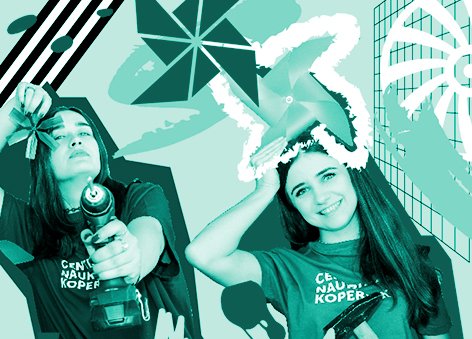
In this project, we developed and implemented a renewable energy workshop scenario specifically for teenage girls. The workshops were delivered to the target group several times and accompanied by media outreach. The goal was to spark interest in engineering careers through the prototyping and testing of custom-designed wind turbines. The scenario was created through an R&D process. We began by holding interviews with representatives of the target group, followed by prototype testing in at Copernican Revolution Lab facilities. A new feature was the use of the Copernican Revolution Lab’s professional recording studio — participants presented their designs on camera
Project Goals
- To inspire teenage girls to consider careers in engineering and promote career paths typically perceived as non-female.
- To engage young girls with the topic of renewable energy – particularly wind power – through project-based learning.
The Product
A structured workshop scenario for teenage girls focused on designing and prototyping wind turbines.
Research Team
Copernicus Science Centre
Magdalena Puczko, PhD, Natalia Arciszewska, Aleksandra Kalata
More
Project page on the Copernicus Science Centre website: Young Girl Builders: Designing Wind Turbines
Articles
- Keywords: research exhibit, collaboration, Cartesian coordinate system
- Duration: from April 2023
- Project Coordinator: Katarzyna Potęga vel Żabik
- Contact: katarzyna.potega@kopernik.org.pl
- Partner: University of California, Berkeley
- Funding: European Regional Development Fund, under the Regional Operational Programme of the Mazowieckie Voivodeship 2014–2020 (as part of the project “Establishment of the Copernican Revolution Lab at the Copernicus Science Centre”)
Project Description
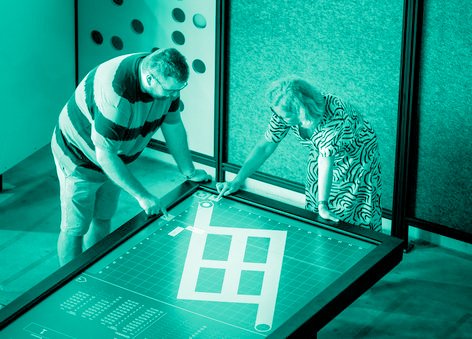
OЯTHO is an interactive research exhibit that takes the form of a two-player tabletop game. Players must work together to guide a virtual ball through a maze – one controls the X-axis, the other the Y-axis – requiring tight coordination and mutual understanding. The game provides an accessible, intuitive introduction to the principle of the Cartesian coordinate system. Developed as part of the LivingLab zone at the Copernicus Science Centre — a space where visitors take part in real scientific research — the OЯTHO exhibit brings together learning theory and educational practice. It offers an engaging experience for users while allowing researchers to collect data on players' interactions and cognitive processes during collaborative problem-solving task s in real time.
Project Goals
- To investigate whether collaboration in an interactive game environment can facilitate learning in mathematics – specifically, grasping the principle of a coordinate system
- To collect and analyse data on learning-by-doing and nonverbal communication
Project Stages
Concept Development
The project team defined the exhibit’s educational and research goals. It was established that the exhibit would take the form of a two-player cooperative game with a dual purpose: to facilitate learning about the coordinate system while also gathering data on real-time cognitive and behavioural processes during collaboration.
Iterative Prototyping
Based on these goals, the first prototype was developed and tested with users in a lab setting. Observations and test data were used to systematically refine the design. Across the iterative process, a total of 11 exhibit versions were created, each one adjusted for improved interaction, clarity, and data capture functionality.
Implementation and Ongoing Development in the LivingLab
After the exhibit was launched in the LivingLab zone at Copernicus, further refinements were made based on data collected from visitors. This has allowed the exhibit to be fine-tuned for real-world use and enhanced both its usability and research value.
The Product
A collaborative, interactive research exhibit OЯTHO, which enables real-time collection and analysis of data related to learning through action and nonverbal communication.
Publication
Potęga vel Żabik K., Abrahamson D., Iłowiecka-Tańska I., (2024), “It Takes Two to OЯTHO: A Tabletop Action-Based Embodied Design for the Cartesian System”, Digital Experiences in Mathematics Education, 10(2), 189–201, online article at link.springer.com.
Value and Impact
This two-player exhibit supplies a unique dataset for research on embodied cognition and collaborative learning-by-doing. At the same time, OЯTHO functions as an engaging exhibition piece, drawing in visitors and introducing them to mathematical concepts in a hands-on, accessible way.
Research Team
Copernicus Science Centre
Ilona Iłowiecka-Tańska, PhD, Katarzyna Potęga vel Żabik
University of California, Berkeley, Graduate School of Education
More
- “It takes two to OЯTHO”, Berkeley School of Education, online article at bse.berkeley.edu.
- “It takes two to OЯTHO”, (2025), UC Berkeley, School of Education, online film on youtube.com