
Festiwal Przemiany - archiwum
Debates
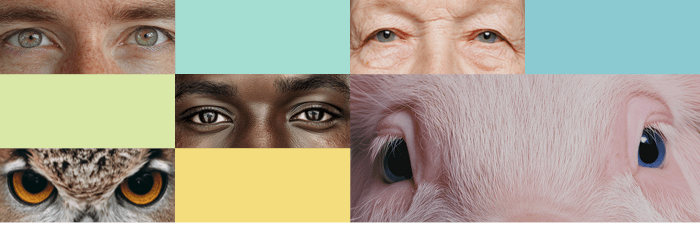
- What: Debates
- When:
- 4 October, 1:00 PM
- 5 October, 1:00 PM and 3:00 PM
- Where: Level 0
We invite you to debate on trust. During the three festival debates, you will divide into two groups (‘for’ and ‘against’ the concept presented) and argue your choices.
Trust is one of the foundations of building empathy. It helps develop openness to diversity, the ability to empathise with others’ perspectives and sensitivity to the needs of others. In today’s complex, volatile and uncertain environment, is it still worth trusting other people, the organisations that deliver products and services, and the technologies that increasingly impact our lives? We will look for answers supported by experts: biologists, psychologists and social psychologists.
We disagree – and then what?
- 4 October, 1:00 PM – 2.00 PM
- Conference centre, Level 0
Expert: Dr Olga Białobrzeska (SWPS University)
Moderator: Błażej Dawidson, Dagmara Szawdyn
Is it worth talking to your antagonist? Society is becoming increasingly polarised. Like many other nations, Poles feel divided into hostile tribes. We are divided not only by views, values and lifestyles, but also by the actions of the media, companies and politicians. Growing distrust and resentment of the ‘other’ threatens the foundations of democracy, in which agreement and conversation are essential.
Can we change this? Is it possible to have a constructive conversation between people with radically different views? Or is there no point in trying any more, because no one will convince anyone anyway, and we will only argue?
We will be introduced to the topic of conversation in times of division by Dr Olga Białobrzeska, a researcher of community and kindness.
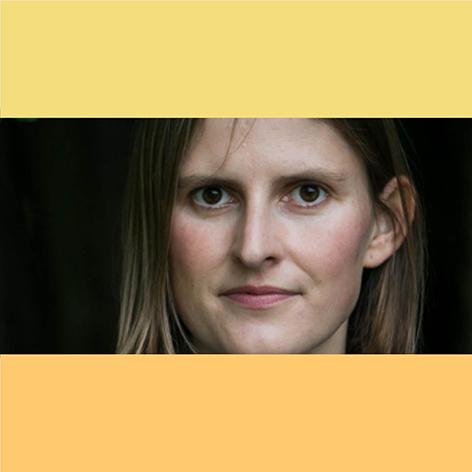 Dr Olga Białobrzeska - social psychologist, affiliated with the Centre for Social Relationship Research at SWPS University. Her research interests focus on the role of community in human life. She conducts research on everyday kindness, world-view polarisation and ways of having conversations that foster connection despite differences. Board member of the New Community Foundation, which aims to reduce social divisions and rebuild a civic community in Poland. At the foundation, she is responsible for the methodology of depolarisation activities and also gives lectures and trainings on good conversation.
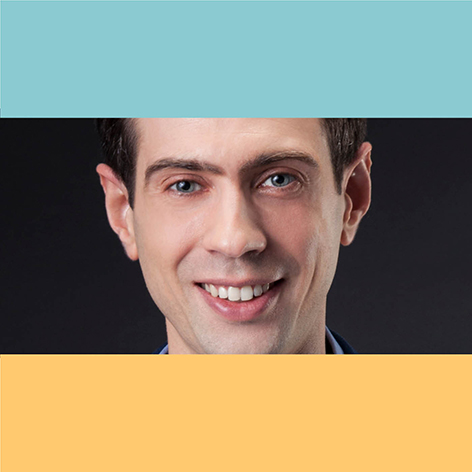 Błażej Dawidson - educated as a sociologist and service designer. Currently a consultant in the field of science communication, among others. He previously worked at the Copernicus Science Centre, where he co-created experimental programmes to enable encounters and partnership dialogue between civil society and science practitioners.
Innovation in the pharmaceutical industry – credit of trust
- 5 October, 1:00 PM – 2.30 PM
- Conference centre, Level 0
Experts: Magdalena Karpińska and Rafał Lolo (both from: AstraZeneca Pharma Poland), Dr. hab. Patryk Lipiński (Maria Skłodowska-Curie Medical University in Warsaw)
Moderator: Błażej Dawidson, Jula Skauronskaya
Partner of the debate: AstraZeneca
Human has always looked for solutions to ensure their health. We are getting better at treating and preventing disease, as well as alleviating chronic ailments. Human scientific advances and human agency make it possible to push the boundaries of science further and, through cooperation and trust, we can benefit from the solutions thus obtained. Each year, an average of 50 new medicines based on innovative substances are authorised on global markets. These changes and the progress that follows are driven primarily by the innovative pharmaceutical companies, which are investing heavily in research and development with the aim of discovering more effective therapies and improving the quality of the patients’ life. At the same time, like any company, they expect business success.
Medical advances present extraordinary opportunities that contribute to equally important questions. In a world of great investment and constant discovery, is it always the people who matter most? What does the process of developing and testing new drugs look like in practice? Who decides which therapies reach the patients? How do pharmaceutical companies work with physicians – and where does the line of trust lie?
Is it actually worth trusting the pharmaceutical companies that create new drugs and the physicians who prescribe them to us? Together with festival partner AstraZeneca, we invite you to join the debate.
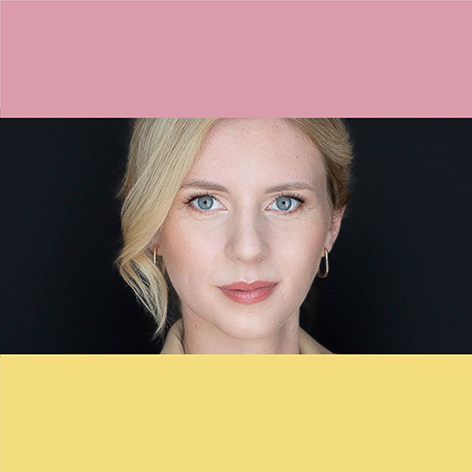 Magdalena Karpińska - graduate of the Warsaw School of Economics and the University of Warsaw. She has more than 12 years of compliance experience in the pharmaceutical industry. As of 2018, she holds the position of Compliance Associate Director at AstraZeneca. During her tenure, AstraZeneca was awarded three times in the ‘Ethical Company’ competition. She was also a speaker at the postgraduate course Pharmacy in Business run by the Medical University of Warsaw in cooperation with AstraZeneca.
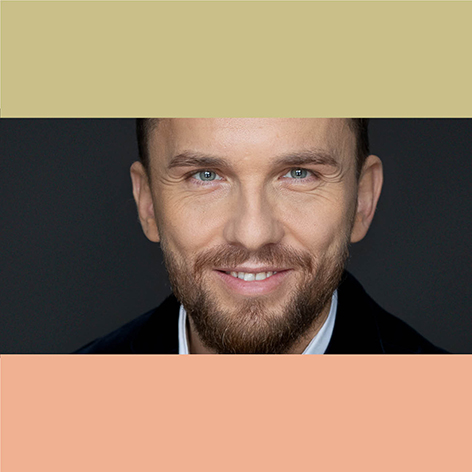 dr Rafał Lolo - molecular biologist, specialising in the field of precision medicine. Since 2020, Rafał has been Precision Medicine Lead in the global R&D team at AstraZeneca responsible for drug development with relevant biomarkers and molecular tests in oncology.
His key areas of interest are biomarker development, molecular testing, registration of drugs and molecular tests in the US, EU, JP, CN, design and conduct of clinical trials in biomarker-based patient selection, commercialisation of precision medicine drugs and tests.
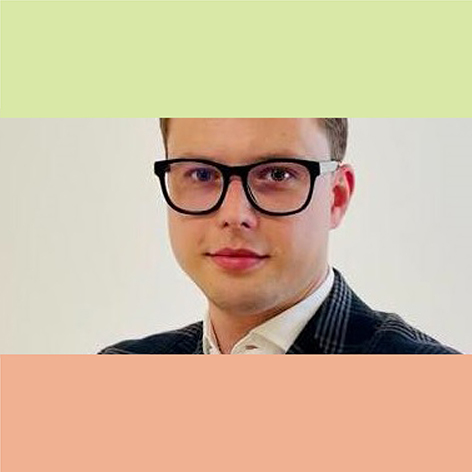 Dr. hab. Patryk Lipiński – pediatrician and professor at the Maria Skłodowska-Curie Medical University in Warsaw. His clinical and research interests focus on inherited metabolic disorders and other rare genetic diseases in children. He works at the Pediatric Department of Bielański Hospital in Warsaw and coordinates pediatric education for medical students at his university. In 2023, he was awarded 8th place in the prestigious “Supertalents in Medicine” competition.
Cybertraining for empathy
- 5 October, 3:00 PM – 4:00 PM
- Conference centre, Level 0
Experts: Dr Daniela Hekiert-Małozięć (SWPS University), Dr Konrad Maj (SWPS University)
Moderator: Błażej Dawidson, Marta Iglewska
Will we allow technology to shape our sensitivity towards others? Games, apps, Artificial Intelligence and immersive technologies can influence the way we perceive others and the world. Dr Daniela Hekiert-Małozięć’s research on VRPT (virtual reality perspective-taking) shows that impersonating a representative of a foreign group in virtual reality affects empathy and changes attitudes towards people from other cultures. Immersive virtual environments work stronger on people’s emotions and attitudes than standard 2D films. Can technology be a cure for global polarisation and resentment towards other cultures? Is it worth trusting it while building empathy and reducing ethnocentrism? Would we be able to subject ourselves to an experiment in which technology affects our sensitivity and empathy?
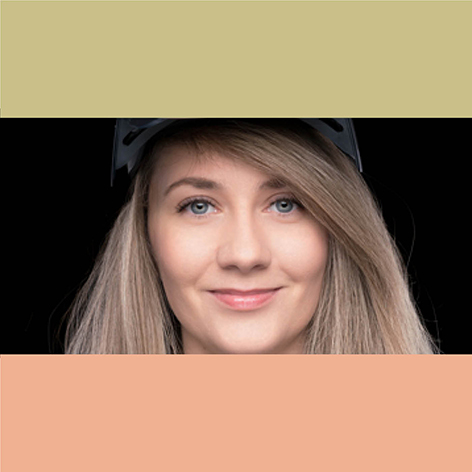 dr Daniela Hekiert-Małozięć - psychologist whose research interests include the application of new technologies, such as virtual and mixed reality (VR and MR), in cross-cultural and social psychology research. She collaborates both with research centres – such as the Virtual Reality Team and the ICT Networks and Internet of Things Technology Team at the Kielce University of Technology or the hAppI Lab at the University of Genoa – and with companies (Interactive Crafts, Hishoo), carrying out projects at the interface of technology, psychological research and UX.
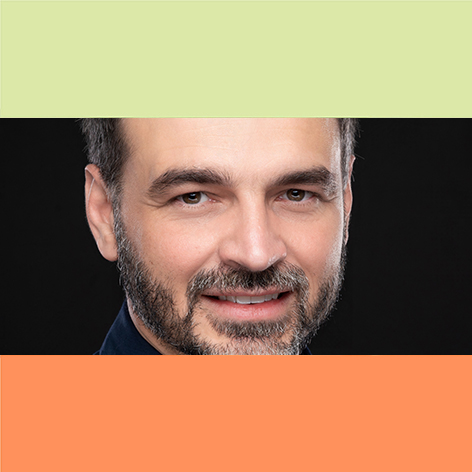 dr Konrad Maj - social psychologist, head and founder of the HumanTech Centre at the SWPS University in Warsaw. Academically, he is concerned with the social and psychological aspects of new technologies, especially Artificial Intelligence and humanoid robotics. Author of numerous scientific publications in renowned journals such as Computers & Education, International Journal of Social Robotics, and Cognition, Technology & Work. He chairs the organising committee of the international HumanTech Summit conference. Laureate of the competition ‘Populariser of Science’ organised by the portal Science in Poland and the Ministry of Education and Science (2023) and the Stefan Szuman Award (2025). Scholarship recipient of the NAWA programme. Included among the 25 most outstanding graduates at the 25th anniversary of the SWPS University.
