
Festiwal Przemiany - archiwum
From the curator
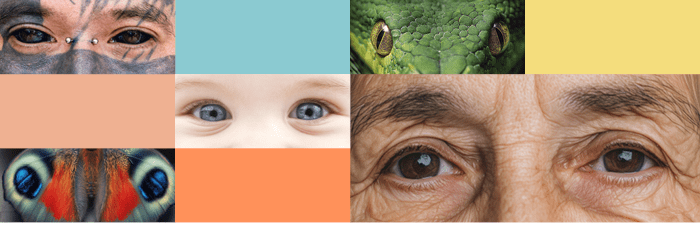
We tend to describe the future in the language of the latest technologies. Sometimes we treat them as a universal key to solving global problems: wars, mass migrations, the climate crisis. However, any tool, even the most sophisticated, can be used for different purposes, depending on the values shared by its users. That is why this year we are focusing our attention on the ethics of progress. At the centre, we put empathy – an ability that enables us to adapt to changing conditions and build social bonds. The theme question: ‘Is empathy for the naive or for the brave?’ is a starting point for thinking about the kind of sensitivity we will need to meet the challenges of the coming decades.
Philosophers and psychologists describe empathy on different levels: from a spontaneous emotional response (affective empathy), through the ability to take on the other person’s perspective, to consciously empathising with their experiences. The etymology goes back to the Greek en + pathos – ‘in the feeling’. From the beginning, therefore, it points to the sharing of emotions, to entering the other’s emotional field. Nowadays, however, emotions are treated with suspicion; they are sometimes considered a sign of weakness and naivety. According to Gabor Maté, a Canadian physician specialising in trauma research, ‘there is a tendency in our culture to see people as inherently aggressive, greedy and ruthlessly individualistic; we do it with either approval or dismay’. In the Western ethos of success, life is a constant struggle: climbing the social ladder without looking back at those ‘less resourceful’. Frans de Waal, primatologist and ethologist, linked this approach to the damaging legacy of Social Darwinism, of which Herbert Spencer was one of the leading proponents. His statement about the ‘survival of the fittest’ can be seen as the foundation of modern capitalism. De Waal called this the veneer theory, according to which morality is supposed to be only a thin layer of culture, hiding the brutal truth. Michael Ghiselin, an American biologist and philosopher, summarised this attitude with the following words: "Scratch an 'altruist' and watch a 'hypocrite' bleed".
The image of a world in which competition and the struggle for dominance rise to the supreme law of nature leads to distorting the ideas of Darwin, for whom the roots of empathy lay deep in the history of evolution. In his book The Descent of Man, he proved that many animals undoubtedly sympathise with each other in the face of suffering or danger. Today we know that elephants keep vigil for injured comrades; wolves feed pack members unable to hunt; chimpanzees comfort each other in moments of tension and even act as mediators in the intra-group conflict situations. Examples can be multiplied. With the development of forms of social life, empathy, growing out of parental concern, became a kind of ‘social glue’ – a mechanism for coordinating and maintaining bonds. The herd’s propensity for care and reciprocity gave it a distinct advantage, and over time it began to transcend the circle of relatives – even where there was no longer a direct exchange of benefits. For de Waal, this shift from protection of closed ones to solidarity with strangers was one of the most fascinating themes in the history of evolution.
Empathy is a complex, multi-storied concept and in colloquial terms, it covers a much wider range of meanings than in the scientific discourse. Thanks to developments in psychology and neuroscience, important conceptual distinctions were made in the recent decades, recognising also the dark sides of this phenomenon. Tania Singer, a prominent psychologist and social neuroscientist and also special guest at this year’s Festival, distinguishes between ‘empathic distress’ and ‘compassion’. The former is a self-focused reaction: empathising with someone else’s suffering, we experience overwhelm, anxiety, exhaustion. This condition, well known to health or social care professionals, generally leads to professional burnout or indifference. Compassion works in a different way: it is not about taking over the pain, but about developing kindness, caring and readiness to help. It means ‘feeling for’, not just ‘feeling with’.
In the light of research conducted by Professor Singer, the festival’s theme question gains a new context. Succumbing to ‘empathic distress’ can be seen as a naïve and unproductive attitude – we immerse ourselves in other people’s pain, but nothing good comes of it. Compassion, on the other hand, is an act of courage, a willingness to understand the other person and provide relief in times of need. This interpretation would probably be agreed with by Paul Bloom, who points out in his acclaimed book Against Empathy that intense empathy is sometimes biased, tribal in nature. It focuses on favouring the feelings of members of one’s own group and weakens sensitivity to people from other cultures or representing different values. Examples of this kind of attitude can be seen all too well in our political reality, which is increasingly shaped by populism – depreciating and demonizing everything that is foreign, ambiguous, requiring deeper reflection and openness. Why is it so difficult for us to hear the Other, to perceive and empathise with the needs of a person with a different skin colour, sexual orientation or customs? Perhaps it is precisely the practice of rationally based compassion that can correct this tendency. Is this a naive or courageous thesis? We leave the answer to this question to the participants of Przemiany.
Taking into account different discourses and research perspectives, the festival uses the concept of empathy as a starting point to reflect on key civilisational challenges – social polarisation, development of digital technologies and climate change. During this year’s edition, we consider how deeply compassion is inscribed in our nervous system and the history of evolution. We will also take a look at Artificial Intelligence, with which we are forming increasingly deeper and more intimate relationships. If systems learn to recognise and mimic emotions, will we find their empathy credible? Will machines be able to care for us, or will they only exacerbate our alienation and inability to build connections in the physical world? Finally, we ask about the rights of other species and ecosystems to self-determination and subjectivity, extending the horizon of empathy to the planetary scale. Animals, plants, forests, oceans... they are not a storehouse of resources, but actors on one and the same shared stage of life. Can we widen the field of compassion to include the non-human? What does it mean to listen to the existential needs of the river or to acknowledge the claims of the forest before they fall silent forever?
This year’s Przemiany was born out of the belief that empathy is the core competence of the future. It is like an invisible muscle that needs to be exercised constantly: in relationships, institutions, culture. It is impossible to have it automated, to set a clear framework for it. Its scope is changing along the expansion of our awareness of our place and responsibilities in the shared world. The question we pose: ‘Is empathy for the naive or for the brave?’ does not necessarily lead to a simple verdict either. It is intended to stimulate critical thinking and help formulate further questions. What kind of bonds do we want to strengthen – tribal and national or universally human and planetary? Are we building and developing technologies based on shared ethical values? Where does the strength of our species lie: in competition or in mutual concern?
When thinking about the future, it is probably worth having the courage to believe in the power of kindness, selfless warmth and compassion. Even if it seems naive at first glance.
Rafał Kosewski
Curator of the Przemiany Festival
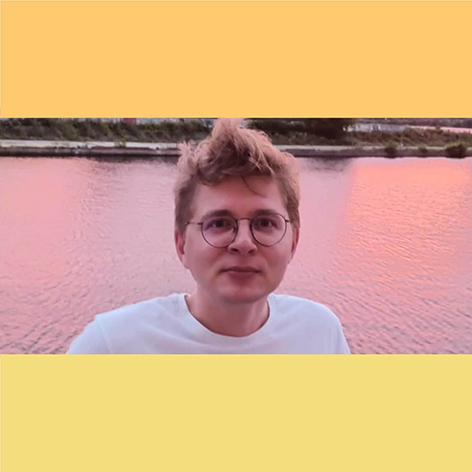 Rafał Kosewski – graduate of the Institute of Polish Culture at the University of Warsaw, exhibition curator, cultural strategist and manager, playwright. He worked, among others, with the Warsaw Rising Museum, the History Meeting House, Museum of Warsaw and the Adam Mickiewicz Institute. For many years, he has been associated with the Copernicus Science Centre as curator of the Przemiany Festival – an event supporting the creative dialogue between art, science and new technologies. In the curatorial work, his research interests focus on areas such as futures studies, speculative design, critical posthumanism, art & science.