
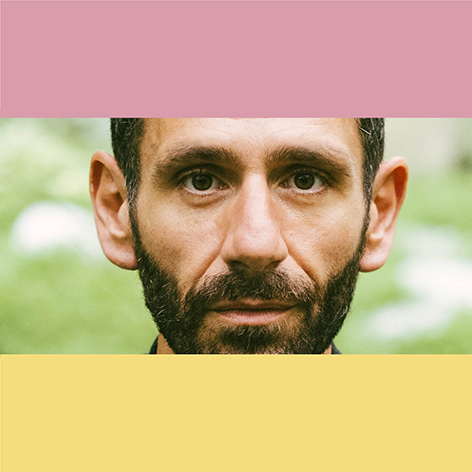
 Marco Barotti is a multimedia artist working at the intersection of art, science, sound, and environmental research. His data-driven kinetic sound sculptures—crafted from audio technologies, consumer electronics, waste, and natural materials—form fictional “tech ecosystems” that mimic the behaviors of animals and plants. These works merge scientific inquiry with artistic imagination, raising awareness of the ecological and cultural conditions of the Anthropocene.
Barotti’s practice explores how technology can be reimagined as part of the natural world, using sound as a bridge between disciplines and species. His work fosters dialogue between scientific research and public perception,translating complex ecological data into emotionally resonant experiences.
He has received numerous awards, including an Honorary Mention at the S+T+ARTS Prize, the NTU Global Digital Art Prize, the Tesla Award, and the Delux Colour Award. His projects have been supported by institutions such as S+T+ARTS, Stiftung Kunstfonds, EMAP/EMARE, BBK, Musicboard Berlin and the Zer01ne Creators Project.
His installations have been exhibited at leading international venues including the Gwangju Biennale, Ars Electronica, Saatchi Gallery, Science Gallery Melbourne, New Media Gallery, Futurium, FACT Liverpool, WRO Art Center, Dutch Design Week, among others.
 Karolina Breguła - (b. 1979) visual artist, author of films, photographs, installations and social actions. She creates stories about art, architecture and urban spaces, which are the area of her anthropological and sociological observations. She practices collective fiction writing, which she considers as her political activity to support the process of diagnosing, expressing and discussing social problems. She is currently working on a research project on human’s relationship with the sea. Her work was exhibited by institutions such as the Jewish Museum in New York, the Taipei Museum of Contemporary Art, the Tokyo Photographic Art Museum and at international events such as the Venice Biennale and the Singapore Biennale. She was granted several scholarships and awards including the Spojrzenia award, the EMAF festival award, the Złoty Pazur award at the Gdynia Film Festival and others. She works at the Academy of Art in Szczecin. Since autumn 2023, together with Weronika Fibich, she has been running Lokatorne – a place for anti-disciplinary activities. She collaborates with the lokal_30 gallery.
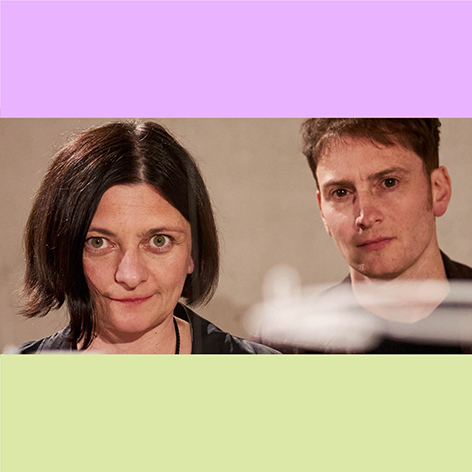 Centrala (Gosia Kuciewicz i Simone De Iacobis) - create projects under the slogan ‘Amplification of Nature’, based on the study of the relationship betweenarchitecture and natural processes. For them, architecture is a flow, not just a static form, while gravity, water circulation, atmospheric or astronomical phenomena are its building blocks. They consider architecture, which combines the intimate, human scale with the scale of the planet, as a toolthat helps to tune us to the rhythms of the world around, to enhance our sense of connection with nature, to open us up to experiencing its disappearing cycles, to direct our attention to the relationship of micro-events and transformations taking place at the scale of the Earth.
CENTRALA won the competition FUTUWAWA. How we will live in the Warsaw of the future (2021). CENTRALA is known for its ability tohighlight relevant phenomena and introduce into the debate new concepts and ways of looking at the city. It presented its projects at the Venice Biennale of Architecture (2018, 2023), London Design Biennale (2021), Lisbon Triennale of Architecture (2022) and Gwangju Biennale (2023). Since 2017, it has continuouslycollaboratedwith the Kharkiv School of Architecture.
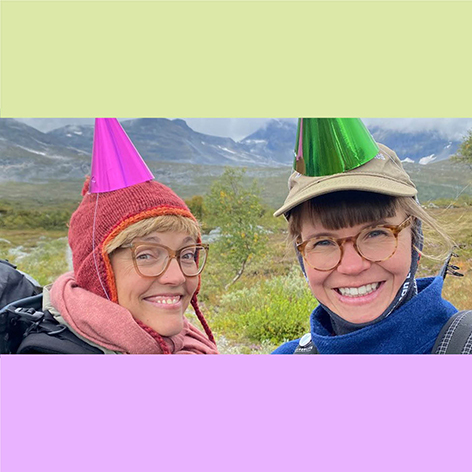 Karoline Hjorth and Riitta Ikonen - the Norwegian-Finnish artist duo Karoline Hjorth and Riitta Ikonen combines photography, anthropology, activism and education to challenge conventional narratives on how humans relate to their surroundings across diverse cultures and landscapes, calling for a collective and synchronized environmental stewardship. Hjorth & Ionen have created public art commissions for the PyeongChang Winter Olympics, climbed on the TED stage in Boston, and their works have been exhibited by art institutions worldwide, including the Barbican Centre in London, the Norwegian Museum of Photography and the Museum of Contemporary Art in Helsinki. Their first sold-out book was nominated ‘Best first photobook in the world’, the sequel is available from the artists' website, and the third book will be released in 2027.
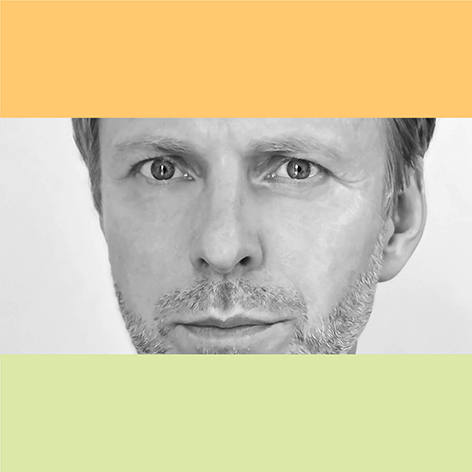 Konrad Juściński - a visual artist who creates objects, spatial installations, and performances. At the Institute of Visual Arts, he leads the Sculpture Studio.
He is a graduate of the University of Arts in Poznań. In 2014, he earned his doctorate at the Department of Sculpture and Spatial Activities (University of Arts in Poznań).
He has exhibited in Poland and abroad, including Germany, Sweden, Norway, France, and Japan. He was twice a scholarship recipient of the Ministry of Culture and National Heritage and the Adam Mickiewicz Institute. In 2007, an artist residency in Ireland (Cill Rialaig Retreat). In 2016, a research fellowship was awarded by Tokyo Arts & Space in Japan. In 2017 and 2022, artist residencies in Japan. In 2017 - II prize at the 12th International Festival of Visual Art inSPIRACJE in Szczecin. She lives and works in Poznan and Zielona Gora (Poland).
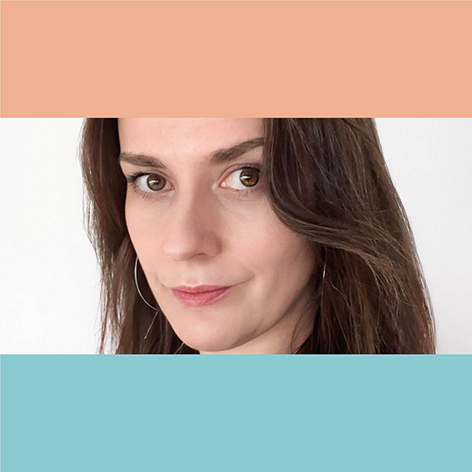 Natalia Kopytko - graduate of the Faculty of Sculpture at the Academy of Fine Arts in Kraków (2007) and Doctor of Arts at UKEN (2019). Assistant Professor at the Institute of Art and Design since 2016. Scholarship holder of the Ministry of Culture and National Heritage – ‘Young Poland’ (2016), the City of Kraków (2018), and the ‘Resilient Culture’ Programme (2020). She creates sculptures and installations, mainly ceramic. In her works, she explores memory, traces, reflections of things that do not exist, and evokes the forgotten. She is involved in the ‘archaeology of childhood' – the exploration of places and objects of special significance and their relationship with nature and human. Member of the O.W.L. collective. She lives and works in Kraków.
 Diana Lelonek - graduated from the department of Photography in the Faculty of Multimedia Communication at the University of Art in Poznań (PL). She defended doctoral dissertation at the Interdisciplinary PhD Studies, University of Art in Poznań. She currently works at the Academy of Fine Art in Warsaw.
Diana Lelonek explores relationships between humans and other species. Her projects are critical responses to the processes of over-production, unlimited growth, and our approach to the environment. She uses photography, living matter, and found objects, creating work that is interdisciplinary and often appears at the interface of art and science. She participated in several international biennales, festivals, and group shows at: Edith-Russ-Haus for Media Art, Oldenburg; Kunstraum Niederosterriech, Vienna; Temporary Gallery, Cologne; Tallin Art Hall; Culturescapes Festival, Basel; Musee de l’Elysee, Lausanne, Latvian Center for Contemporary Art, Kunstmuseum Bonn, Tinguely Museum, Basel.
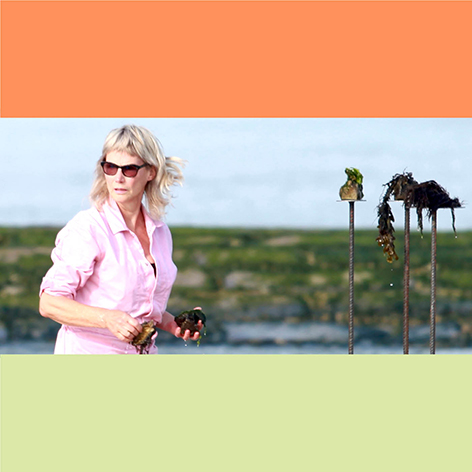 Anne Marie Maes is a Brussels-based multidisciplinary artist whose work blends art, science, and ecology. With a background in botany and visual anthropology, she explores ecosystems, alchemical processes, and the intricate relationship between nature and form. Her practice integrates living organisms, biological, digital, and traditional media to examine self-generating art processes. On the roof of her studio, she has created an experimental garden and field laboratory, studying insects, bacteria, and natural phenomena to understand how form emerges in nature. Maes’s long-term projects, such as Connected Open Greens, Bee Agency, and Laboratory for Form and Matter, engage with ecological systems through collaboration with universities and fablabs. Her work is deeply influenced by the temporal nature of processes and the use of natural and everyday materials, drawing inspiration from the working methods of Bauhaus and Arte Povera. Maes has received multiple awards and exhibited internationally, pushing the boundaries of art and ecology.
Amalia Pica - (b. 1978), Neuquén Capital, AR) lives and works in London, UK. Pica received her BA from the Escuela Nacional de Bellas Artes P.P. in Buenos Aires, AR, in 2003 and attended graduate school at the Rijksakademie van Beeldende Kunsten in Amsterdam, NL, in 2005.
Solo exhibitions include Museo Jumex, Mexico City, MX (2023); CCA, Brighton, UK (2022); Fondazione Memmo, Rome, IT (2022); Museum Haus Konstruktiv, Zurich, CH (2020); Cc Foundation,Shanghai, CN (2018); Institute of Modern Art, Brisbane, AU (2017); Van Abbemuseum, Eindhoven, NL (2014); Kunsthalle Lissabon, PT (2013); MIT List Visual Arts Center, Cambridge, US (2013); Chisenhale Gallery, London, UK (2012) and Malmö Konsthall, SE (2010), among many others. In 2020, Pica was awarded the Zurich Art Prize, which included a solo exhibition at Haus Konstruktiv, Zurich, CH, and in 2011, Pica participated in the 54th Venice Biennale. Pica’s works are represented in major collections including: Tate, UK; Guggenheim, New York, US; Museum of Contemporary Art, Chicago, US; Museo Nacional de Bellas Arte Neuquén, Neuquén, AR; and Stedelijk Museum, Amsterdam, NL.
Rafael Ortega Ayala - Mexico City, 1965. Started working in cinema within the area of cinematography, where he participated professionally in more than 30 projects, both fiction and documentary. In 1993 he begins working within the arts, and since then he has collaborated, developed, photographed and/or co-authored more than 80 art pieces with artists of his generation. Francis Alÿs, João Penalva, Amalia Pica, Melanie Smith, Abraham Cruzvillegas, Javier Tellez, Alexander Apostol, Damian Ortega, Maya Goded, Hannah Collins and Silvia Gruner, are some of the artists he has worked with. Collaborative and co-authored works have been shown in: MoMA NY, Tate Modern, Tate Britain UK, Museo Tamayo Mexico, MUAC Mexico, MALBA Argentina, MACBA Barcelona, AGO Canada, Porto Alegre Biennale 2007, 2011, Hamburger Bahnhoff, Barbican London, Ludwig Museum Cologne, Serralves Porto, Venice Biennale, 49th 2001, 54th 2011, 56th 2015, 58th 2019, 59th 2022, amongst other Museums and private galleries.
Lives and works in Mexico City and London.
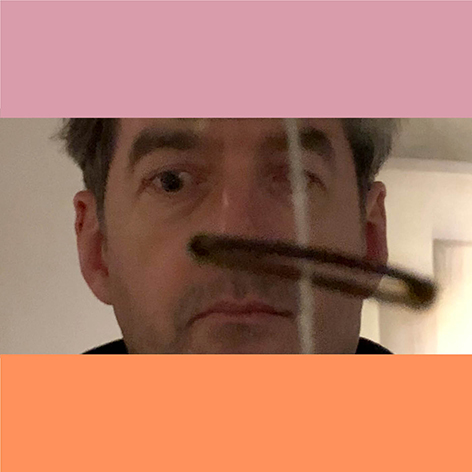 Oliver Ressler - produces installations, projects in public space, and films on economics, democracy, climate breakdown, racism, forms of resistance and social alternatives. Ressler had comprehensive solo exhibitions at National Museum of Contemporary Art (MNAC), Bucharest; SALT Galata, Istanbul; Museum of Contemporary Art, Zagreb; Museo Espacio, Aguascalientes, Mexico; and Belvedere 21, Vienna. He has participated in 480 group exhibitions—including at the Museo Reina Sofía, Madrid; Centre Pompidou, Paris—as well as biennials in Prague, Seville, Moscow, Taipei, Lyon, Gyumri, Venice, Athens, Quebec, Helsinki, Jeju, Kyiv, Gothenburg, Stavanger, and Istanbul, and Documenta 14 in Kassel in 2017.
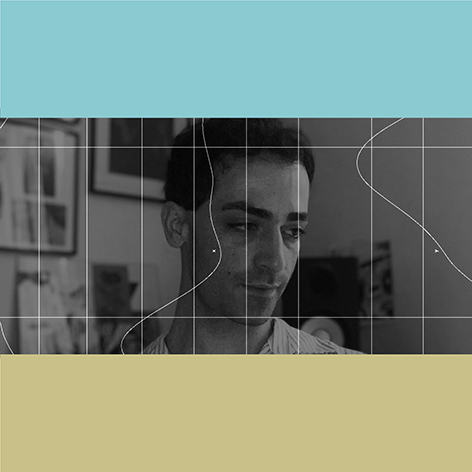 Sefa Sagir - multimedia artist, musician, and performer. He creates interactive experiences that merge art and new technologies, from immersive visual systems to sound design. He teaches at the Polish-Japanese Academy of Information Technology in Warsaw and has collaborated with institutions including the Copernicus Science Center, Goethe-Institut in Berlin, Haus der Kulturen der Welt, Berlin Science Week, and the Sapporo International Art Festival. His current focus is on theater and audiovisual performance, weaving together art, technology, and dramaturgy into cohesive narratives.
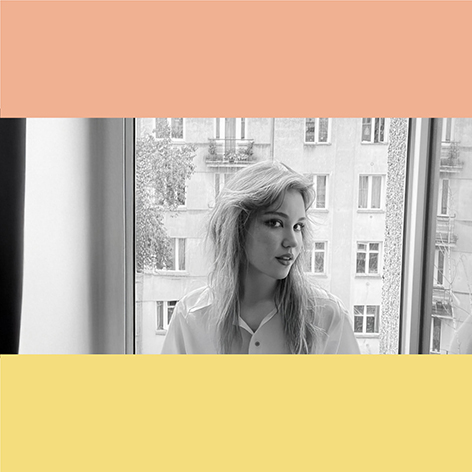 Kaja Modzelewska - is a multimedia artist, painter, and graphic designer whose practice explores the intersection of visual communication. Working across fine arts and interactive digital technologies, she approaches her practice as a living dialogue between disciplines, merging seemingly distant fields into cohesive narratives, grounded in the belief that art is inseparable from the realities it emerges from. She has collaborated with institutions including Musée Rodin in Paris and the Museum für angewandte Kunst in Vienna as part of the Vienna Biennale for Change 2021.
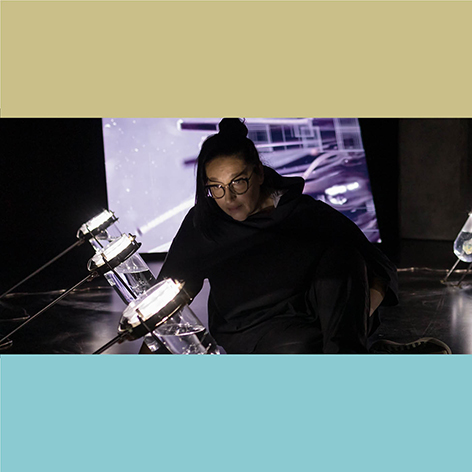 Robertina Šebjanič - based in Ljubljana, is an artist/researcher whose practice drifts through the fluid thresholds of ecology, (geo)politics, and arts, attuned to the rhythms and ruptures of aquatic worlds. Her award- winning works navigate the intertidal zones between species, and bringing to the surface the submerged voices of oceans and rivers.
Her latest project, Echoes of the Abyss, builds on research initiated during her residency aboard the TARA research vessel in the Baltic Sea; continued in North and Adriatic Sea, investigating the environmental and geopolitical toxic legacy of submerged unexploded munitions.
Her works received awards, honorary mentions and nominations at Prix Ars Electronica, Starts Prize, Falling Walls., Re: humanism.
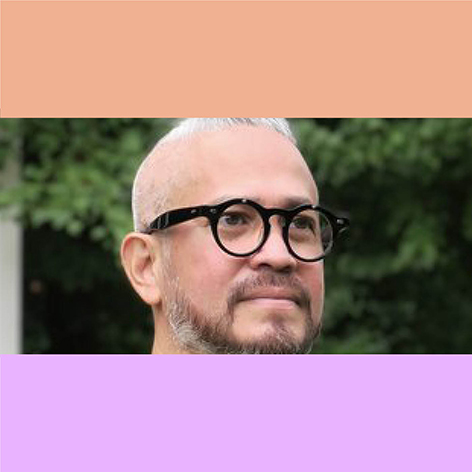 Kuai Shen - is an artistic mediator of ant worlds specialised in multispecies ethnography. His practice-led research employs technology-based performances and decolonial tactics to overturn conventional representations of ants by dominant research imaginaries. Kuai develops the concept of inverted aesthesis: a multisensory amplification of insect-human relations through earthly attunements with more-than-human ecologies and indigenous ontologies.
His transversal work has been published in journals such as Society and Animals, Antennae, Art&Australia, Humans and Nature, and in the book Distributed Perception. His artworks have been commissioned by Eli Broad Museum, FACT Liverpool, National Art Gallery Vilnius, House of Arts Brno, Museo de Arte Contemporáneo Quito. Kuai has been awarded stipends and prizes, such as Musikfonds Germany, Bridge from Michigan State University, the Saxony Cynetart Award, the Edith-Russ-Haus Media Prize, and an honorary mention at Prix Ars Electronica.
 Oliwia Thomas - painter, performer, and environmentalist. She holds a Master’s degree from the Faculty of Media Art at the Academy of Fine Arts in Warsaw, where she developed her interests within the Art & Science framework, particularly in areas such as neuroaesthetics, ethnobotany, hydrology, and geoecology. A laureate of the Artystyczna Podróż Hestii competition and the Coming Out – Best Diplomas of the Academy of Fine Arts showcase. She has participated in exhibitions including COP26 in Glasgow, Galeria Labirynt, and the Museum of Modern Art in Warsaw, and has collaborated with galleries such as Raster and TRAFO, as well as with the Warsaw Greenery Authority and the University of Warsaw. In her practice, she focuses on a dialogue with nature, seeking languages of communication with other forms of life as a way to counteract the destruction of Poland’s natural heritage.
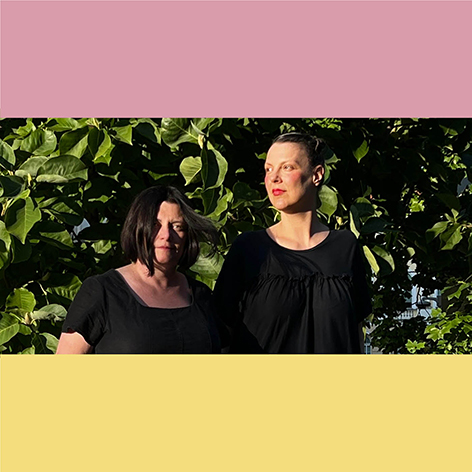 ZOE (Małgorzata Gurowska, Agata Szydłowska)
Agata Szydłowska – researcher, book author, curator. Doctor of Humanities specialised in Ethnology, graduate of Art History at the University of Warsaw and the School of Social Sciences at the Institute of Philosophy and Sociology of the Polish Academy of Sciences. Assistant professor in the Department of Design Theory at the Faculty of Design at the Academy of Fine Arts in Warsaw. Author of, among others, the book Futerał. O urządzaniu mieszkań w PRL-u (2023), Od solidarycy do TypoPolo. Typografia a tożsamości zbiorowe w Polsce po roku 1989 (2018) and co-author (with Marian Misiak) of the book Paneuropa, Kometa, Hel. Szkice z historii projektowania liter w Polsce (2015).
Curator and co-curator of several exhibitions devoted to Polish design, shown, among others, in New York and Tokyo. In 2019, she co-curated (with Małgorzata Gurowska and Maciej Siuda) the exhibition in the Polish Pavilion at the XXII Triennale di Milano Broken Nature. Design Takes on Human Survival, entitled MYKOsystem. Co-founder of the long-running project ZOEpolis dedicated to the interspecies communities, which has so far had four editions in the form of two exhibitions (in Wrocław, Kraków and Gdańsk) and publications. Together with Małgorzata Gurowska, she co-founded the ZOE collective.
Małgorzata Gurowska – visual artist, curator, author of books. Lecturer at the Academy of Fine Arts in Warsaw. She works at the border of art, activism and science. In her works, she addresses political and social issues, critically describing the relationship between humans and non-humans, as well as seeking more just andempathy-based scenarios. She is interested in bringing togetherdifferent perspectives, people, disciplines. She seeks new connections andcollaborations,including those ofinterspecies nature.
She creates books, drawings and acts outdoors (sculpture, installation, walk). She explores the field of artisticresearch and is interested in generating knowledge through art practices. Her work was shown within the individual and group exhibitions in Poland and internationally, including at the 23rd Triennale di Milano (2019) and in the Museum of Modern Art in Warsaw (2020).
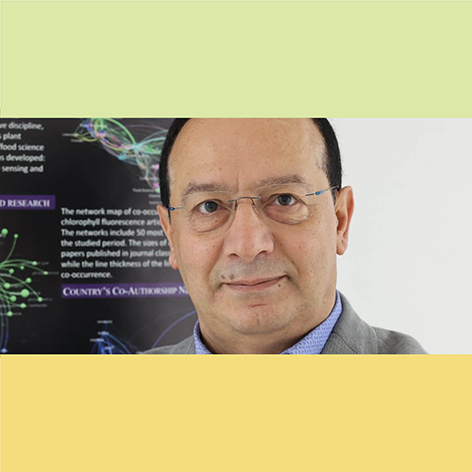 Professor Hazem M. Kalaji - plant physiologist associated for years with the Warsaw University of Life Sciences (SGGW). He conducts research on the process of photosynthesis and the response of plants to abiotic and biotic stresses. He develops innovative solutions for agriculture, horticulture, forestry, environmental protection and urban ecosystems.
He developed the first plant fluorometer, described as a ‘plant ECG apparatus’, and the AI-based automated systems of plant growth in greenhouses. He is an active member of many scientific societies, editor of the JWLD journal and vice-chair of the MSCA and Excellence Hubs panels at the European Commission. He gave classes and seminars in Japan, the USA and Brazil, among others. He co-organised international scientific sessions and participated in the EU and Polish Academy of Sciences expert panels.
His scientific output includes more than 370 scientific publications, six monographs and 27 chapters in books.