
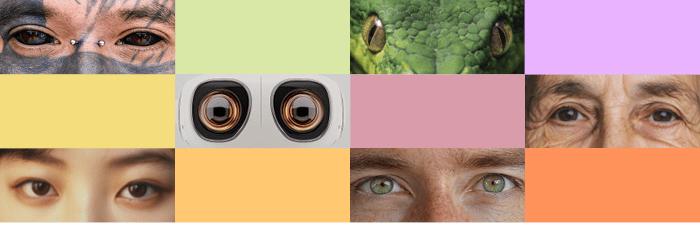
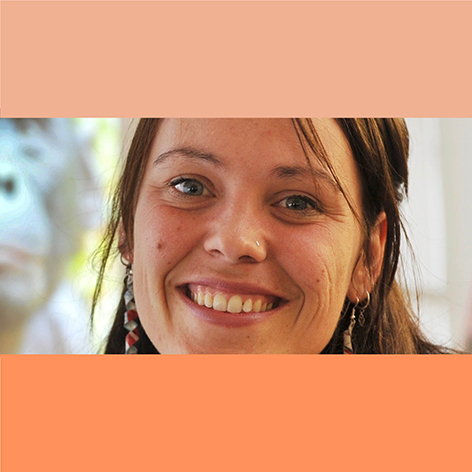
 Zanna Clay is Professor of Comparative and Developmental Psychology at Durham University, where she directs the Comparative Cognitive Science and Intercultural Development Lab. Combining observations in the wild with non-invasive experimental techniques, she investigates the developmental origins of emotion, empathy, social cognition and language in monkeys as well as young children. She specialises in the study of great apes, particularly bonobos – our closest living relatives – which she observes in the wild, in captivity and in semi-natural conditions. She is a member of the Linnaean Society of London and sits on the Council of the Primate Society of Great Britain. She is currently leading a large-scale project on the origins of empathy in great apes and young children across cultures.
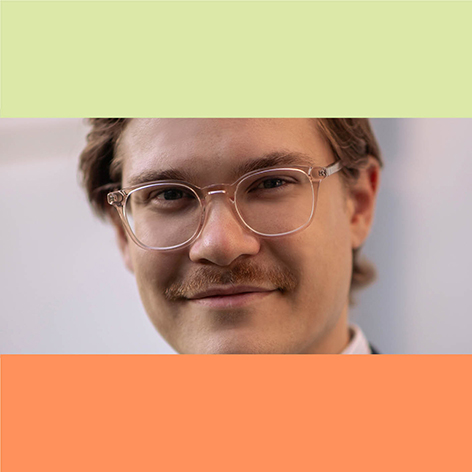 Jan Oleszczuk-Zygmuntowski – economist and co-operative member interested in complex systems, the political economy of technology and the digital economy. Co-chair of the Polish Economy Network and CEO of the PLZ Co-operative, operator of the CoopTech Hub centre for co-operative technologies. PhD student at Kozminski University and lecturer in the Management and AI course. Founder and 2015-2020 CEO of the Instrat Foundation, a progressive think-tank. He gained experience in, among others, the Polish Development Fund. Graduate of the Warsaw School of Economics, scholarship holder of G20 Global Solutions, British Council, Møller Institute, Open Future Foundation and FEPS. Author of Kapitalizm sieci (Network Capitalism), a book nominated for the Economicus 2020 award. DigitalEU Ambassador.
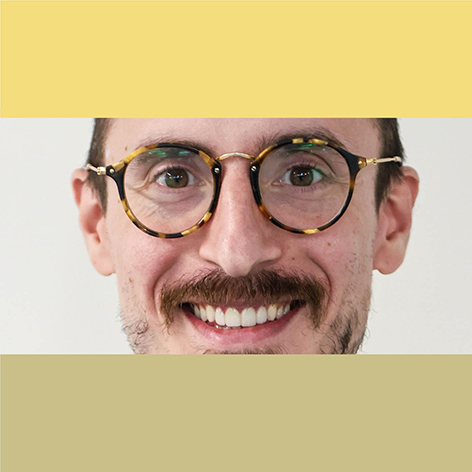 Szymon Filipowicz – educated as a biotechnologist, he holds a master’s degree in Cultural Studies and is a doctoral student at the Doctoral School of the SWPS University. Professionally, he is affiliated with the Copernicus Science Centre, where he works as a researcher in the Future Competences Research Department, where, he is involved in developing knowledge of a variety of learning environments and teaching aids. His academic work focuses on the design of ‘awe’ emotional experiences – transformative experiences of awe and wonder – in the context of learning processes and human well-being.
 Professor Halina Kwaśnicka is a lecturer in the Department of Artificial Intelligence at the Wrocław University of Technology. Her research focuses on Artificial Intelligence, with a particular emphasis on recent work on Explainable AI (XAI). She led numerous projects in the fields of AI in medicine, image analysis and natural language processing and has participated in European and international projects. From 2004 to 2012, she served as Deputy Director of Research at the Institute of Computer Science and was the founding Chair of Artificial Intelligence. She is an expert of the European Commission and a member of the Steering Committee of the INFOSTRATEG programme. Honoured, among others, with the Golden Cross of Merit and the title of Professor Magnus of the Wrocław University of Technology. She was ranked among the Top 10 Women in AI in 2022 by the journal Perspektywy.
 Dr Hab. Marcin Moskalewicz is involved in transdisciplinary research at the interface of philosophy, psychiatry and Artificial Intelligence. He is a leader of the Psychiatry and Computational Phenomenology team at the IDEAS Research Institute in Warsaw, a professor at the Institute of Philosophy at the Maria Curie-Skłodowska University in Lublin and head of the Philosophy of Mental Health Laboratory at the Poznan University of Medical Science. He leads the Phenomenology and Mental Health network at St Catherine’s College (Oxford) and is also a board member of the Philosophy Special Interest Group at The Royal College of Psychiatrists (UK), as well as a programme board member of the Open Philosophy and Psychiatry Seminars Foundation in Warsaw.
 dr hab. Anna Barcz – Professor at the Tadeusz Manteuffel Institute of History at the Polish Academy of Sciences (Spatial History Laboratory), M. Skłodowska-Curie Fellow at Trinity College Dublin and the Rachel Carson Center in Munich. Graduate of the College of Interdisciplinary Individual Studies in the Humanities and Social Sciences (MA in Philosophy) and English Philology at the University of Warsaw. Alumni of the Institute of Literary Research of the Polish Academy of Sciences. Manager of research projects on cultural relations with rivers (Oder 2016–2018; Vistula 2019–2023; Rivers of Europe 2024 – now). Author of books and articles on environmental humanities, including ecocriticism (Realizm ekologiczny [Environmental Realism], 2016; Environmental Cultures in Soviet East Europe, 2020, 2021). Translator and populariser of the thought of T. Morton in Poland (Dark Ecology, 2023).
 Dr Hab. Katarzyna Jasikowska – Professor of the Jagiellonian University (UJ), co-editor and author of the book Za pięć dwunasta koniec świata. Kryzys klimatyczno-ekologiczny głosem wielu nauk (Tick-tock, the end of the world: climate-ecological crisis in the voice of multiple sciences) (Polish version available here, free of charge:
  Dr Stanisław Kordasiewicz works at the Faculty of ‘Artes Liberales’ at the University of Warsaw (Centre for Research and Practice in Cultural Continuity). From 2018 to 2023, he coordinated the international research project COLING and worked closely with users of endangered languages and representatives of indigenous communities. His research interests include legal history, the protection of language and indigenous rights and the rights of nature movement. He is a member of the Council of the Oder Person Foundation, co-author of the draft and author of the explanatory memorandum of the law granting legal personality to Oder. Co-organiser of two editions of the film festival In Our Own Words, dedicated to indigenous cultures and languages. He is a member of the International Observatory on Nature’s Rights.
 Dr Marta Fikus-Kryńska – graduate of the Faculty of Biology at the University of Warsaw. Content designer in the Exhibition Department of the Copernicus Science Centre. Trainer and educator, author of texts, shows, workshops, exhibit and exhibition concepts. She works with children and adults. She is interested in natural processes.